Projects
Infotainment Design Challenge
Successful application for UX position in Vehicle Infotainment team
(Part of University of Washington team for EcoCAR3, a 4-year national competition to convert a Chevrolet Camaro into an advanced hybrid electric vehicle)
Goal: design a feature to include in a vehicle infotainment.
I designed the Predictive Refueling System (PRS), a system that seamlessly and intuitively anticipates and fulfills a user's fuel needs by leveraging data from the car, cloud, and user.
Although sketches refer to gas vehicles, similar concept applies to electric vehicles.
In general, I imagine the UI of the infotainment system to be highly voice-based (with advanced voice recognition as the primary mechanism of communication between driver and car). Voice is ideal as it reduces distraction to driver. However, displays offer visualization of information, useful for maps. For the purposes of this application, I sketched out what the visual displays might look like.
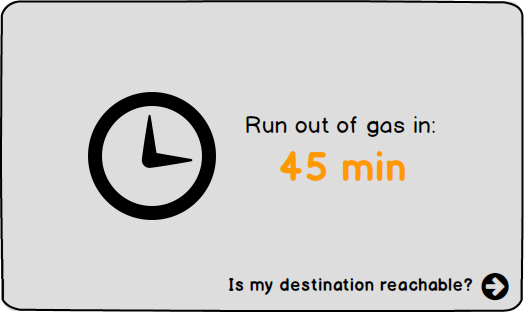
Predictive Refueling System (PRS) lets user know how long until they run out of gas based on current and recent rate of fuel consumption, current and future traffic conditions, road conditions, closures.
If they are en route somewhere, user clicks on “Is my destination reachable?” to determine if they have enough gas to reach where they’re trying to get to.
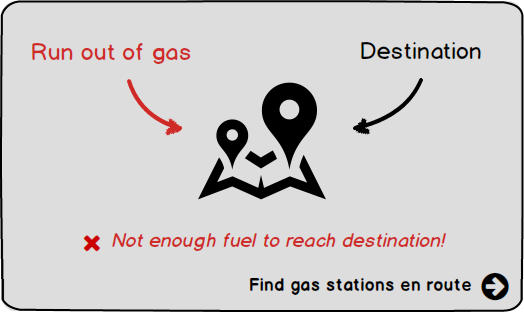
PRS displays at what point the user will run out of gas, relative to their destination. If unable to reach destination with the amount of fuel available, user clicks on “Find gas stations en route.”
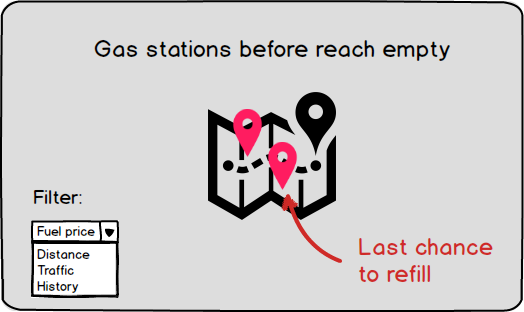
PRS shows user what gas stations are on the way to their destination, including the last station at which the user will be able to refill before running out of gas.
User can filter results based on the price of fuel, distance to station, amount of traffic on the way, and/or past stations where they’ve bought gas. For instance, if they tend to buy gas at Shell stations, they can filter results to prioritize Shell stations.
User clicks on one of the suggested gas stations to get more info.
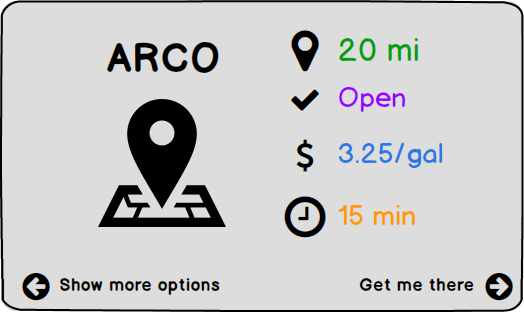
PRS displays relevant info about the selected gas station, including how far away it is (in distance and time), whether or not it is open, and price per gallon.
User clicks on “Get me there” to get directions to selected gas station, or “Show more options” to get back to the previous slide.
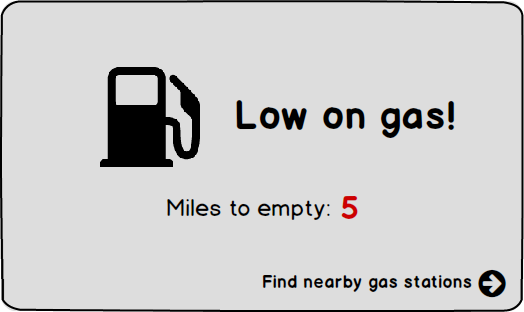
PRS alerts the user that they are low on gas and specified how many miles are left. User clicks on “Find nearby gas stations” to find places where they can refuel within range of current gas level.
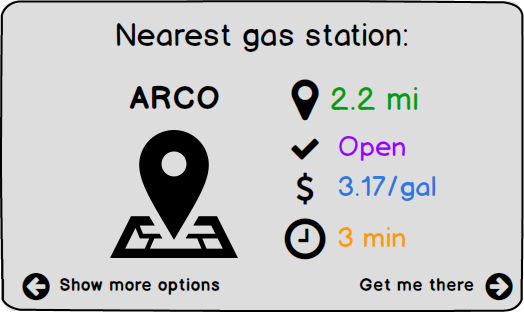
If the user is not en route to a particular destination, PRS suggests the nearest gas station which the user can reach based on how much gas they have left in their tank. User clicks on “Get me there” to get directions to the selected station.
If the user doesn’t like the suggested option, they click on “Show more options.”
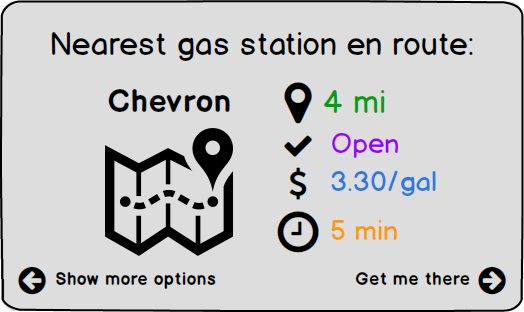
If the user is heading to a particular destination, PRS suggests a station that is on the way so that they aren’t taken out of their way.
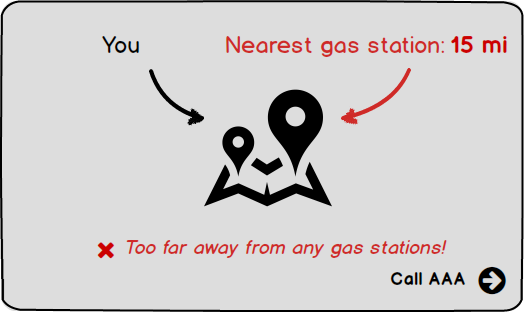
If there are no gas stations within reach of the amount of fuel left, PRS indicates this. User clicks on “Call AAA” and PRS sends an automatic distress message to AAA, along with user’s name, vehicle information, location and membership number.
Goal: describe my thought process behind PRS, including big picture considerations and an example use case scenario.
Feature descriptionGoal: design a usability test to help determine if a given infotainment application is safe to use while operating the vehicle.
UX testIntro to the Design of Everyday Things
a Udacity course by Don Norman, Kristian Simsarian, and Chelsey Glasson
Goal: Find a confusing signifier in the environment and propose a way to fix it.
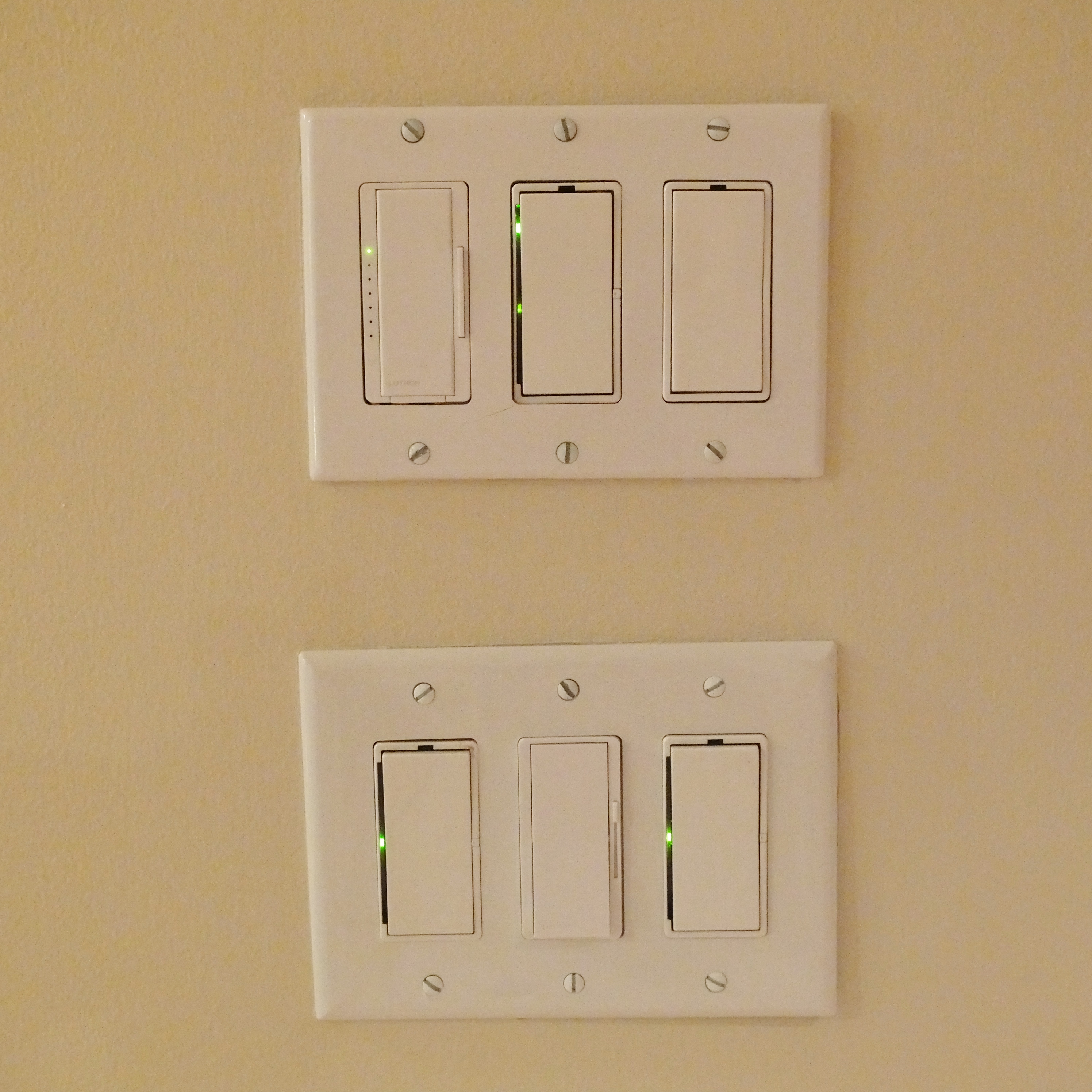
This light panel is a good example of a confusing signifier. The affordance of these switches is clear; they turn on lights. But is it clear which light each switch controls?
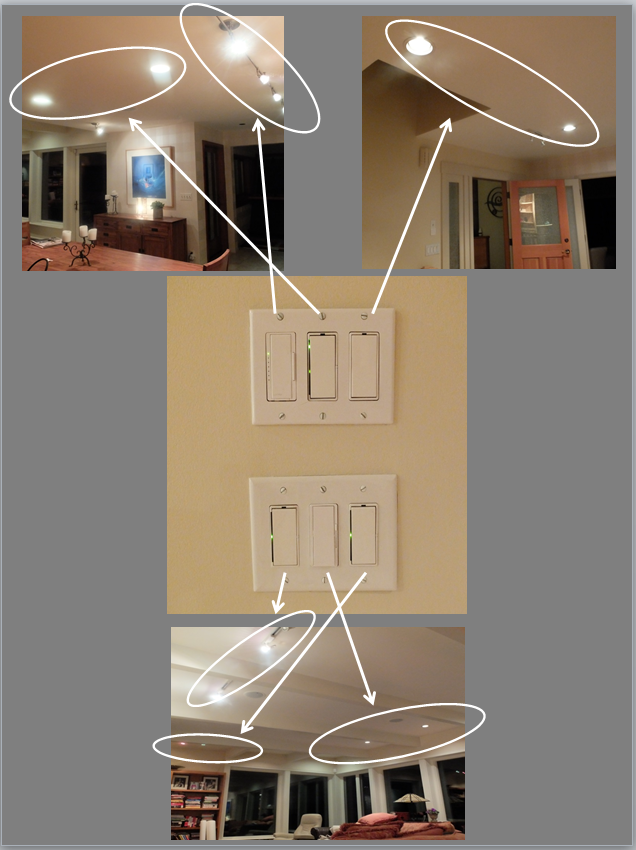
It is not clear to the user how to turn on a specific light. Which switch would they use? The mapping of the switches to the lights is highly confusing.
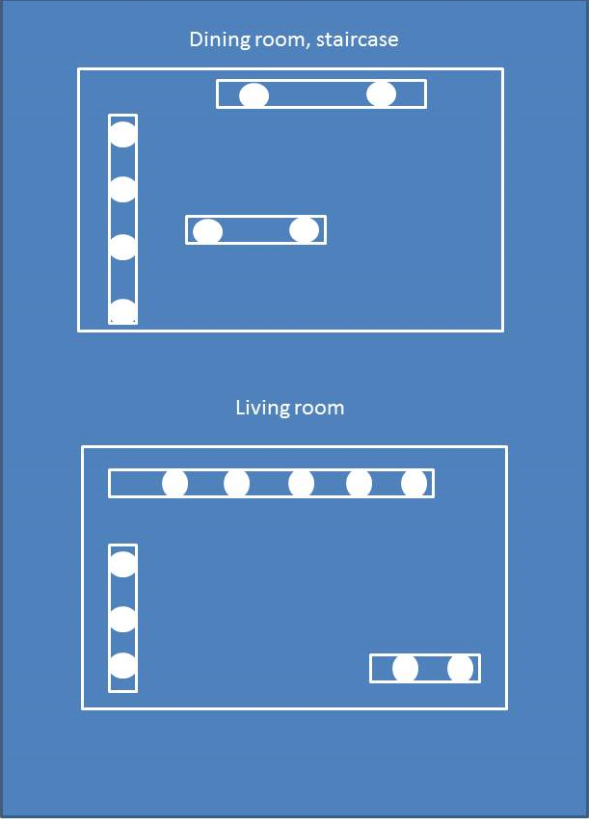
It is not clear to the user how to turn on a specific light. Which switch would they use? The mapping of the switches to the lights is highly confusing.
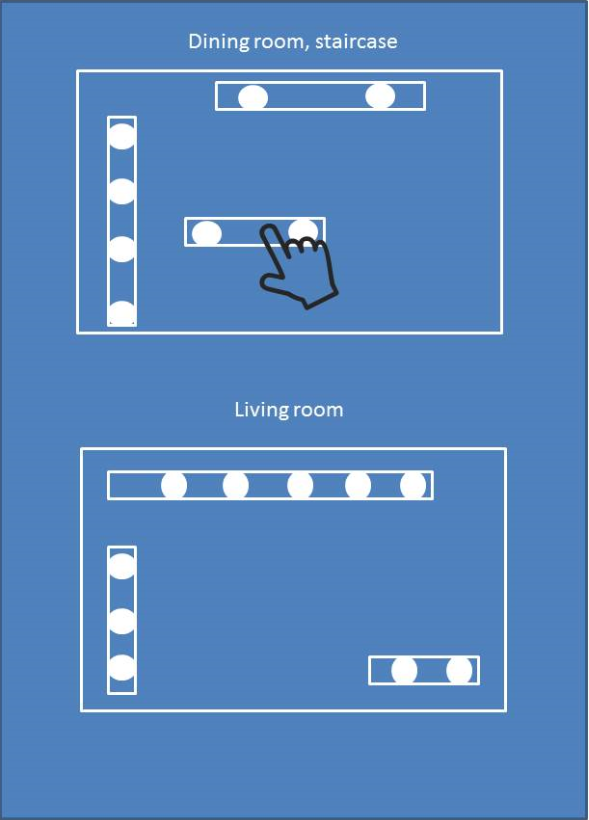
Then you press the set of lights that correspond to the lights you're interested in turning on (and now you know which ones they are, because you have a map of where they are located in the room).
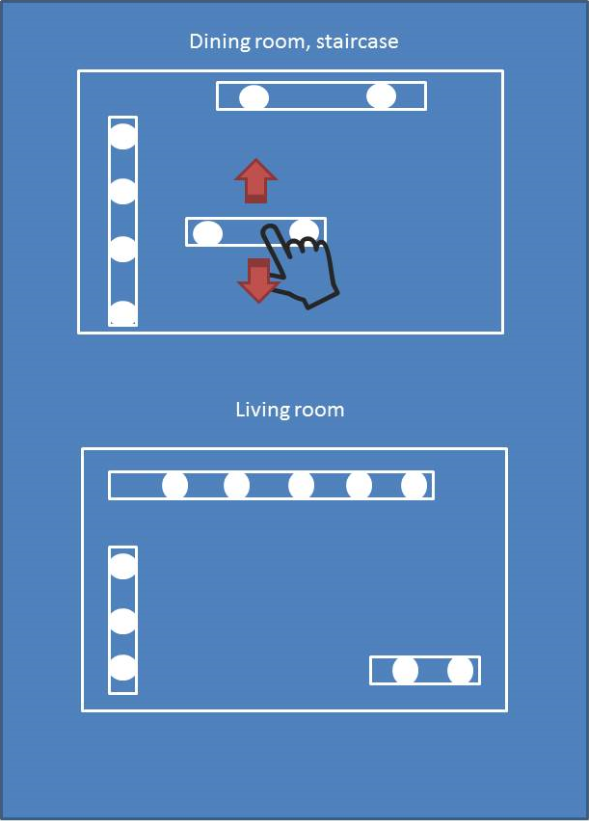
Then you press the set of lights that correspond to the lights you're interested in turning on (and now you know which ones they are, because you have a map of where they are located in the room).
Goal: Transform an ordinary box into an interactive object that would be so compelling that people would grab it, turn it, and rub it.
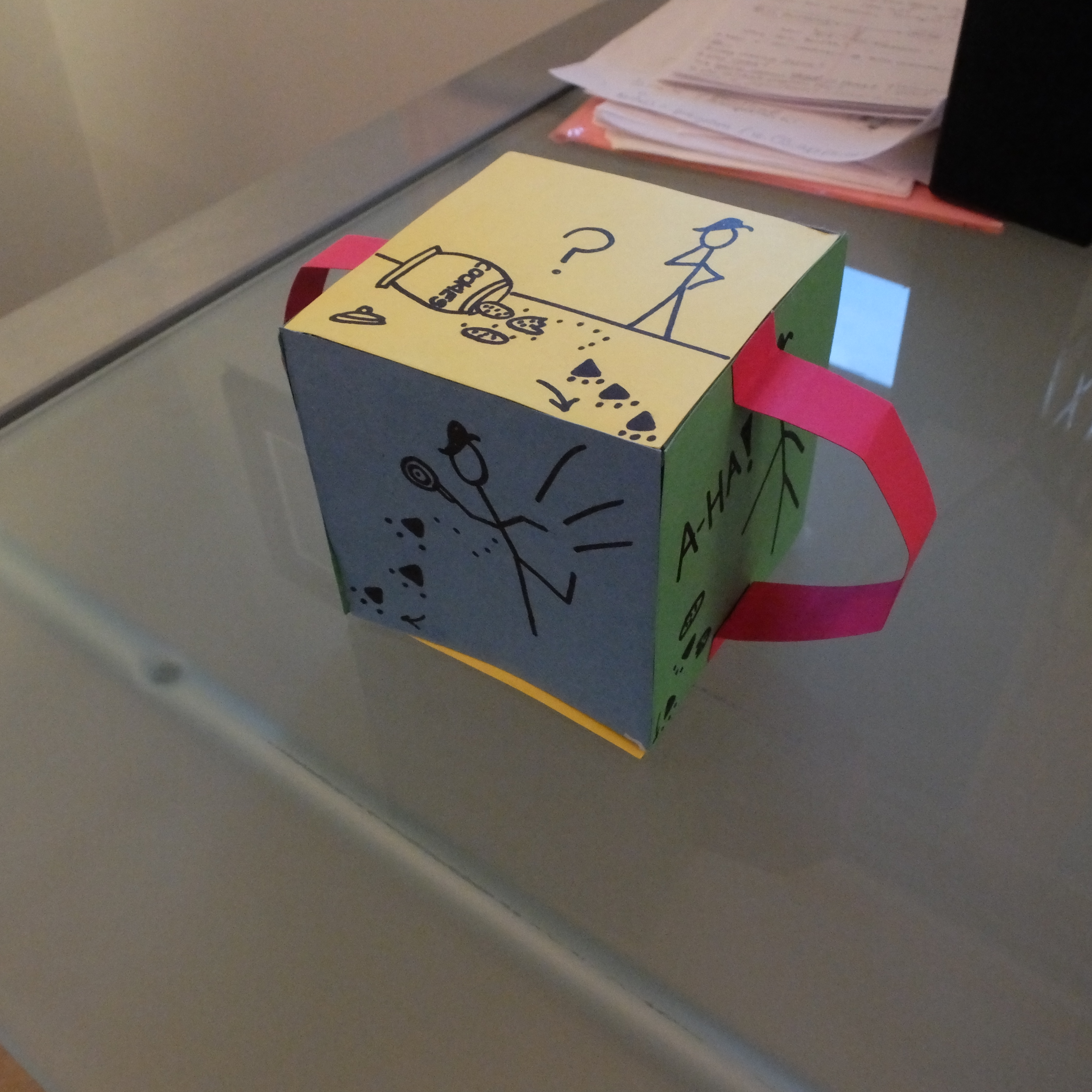
My goal in this assignment was to transform an ordinary box into an interactive object that would be so compelling that people would grab it, turn it, and rub it.
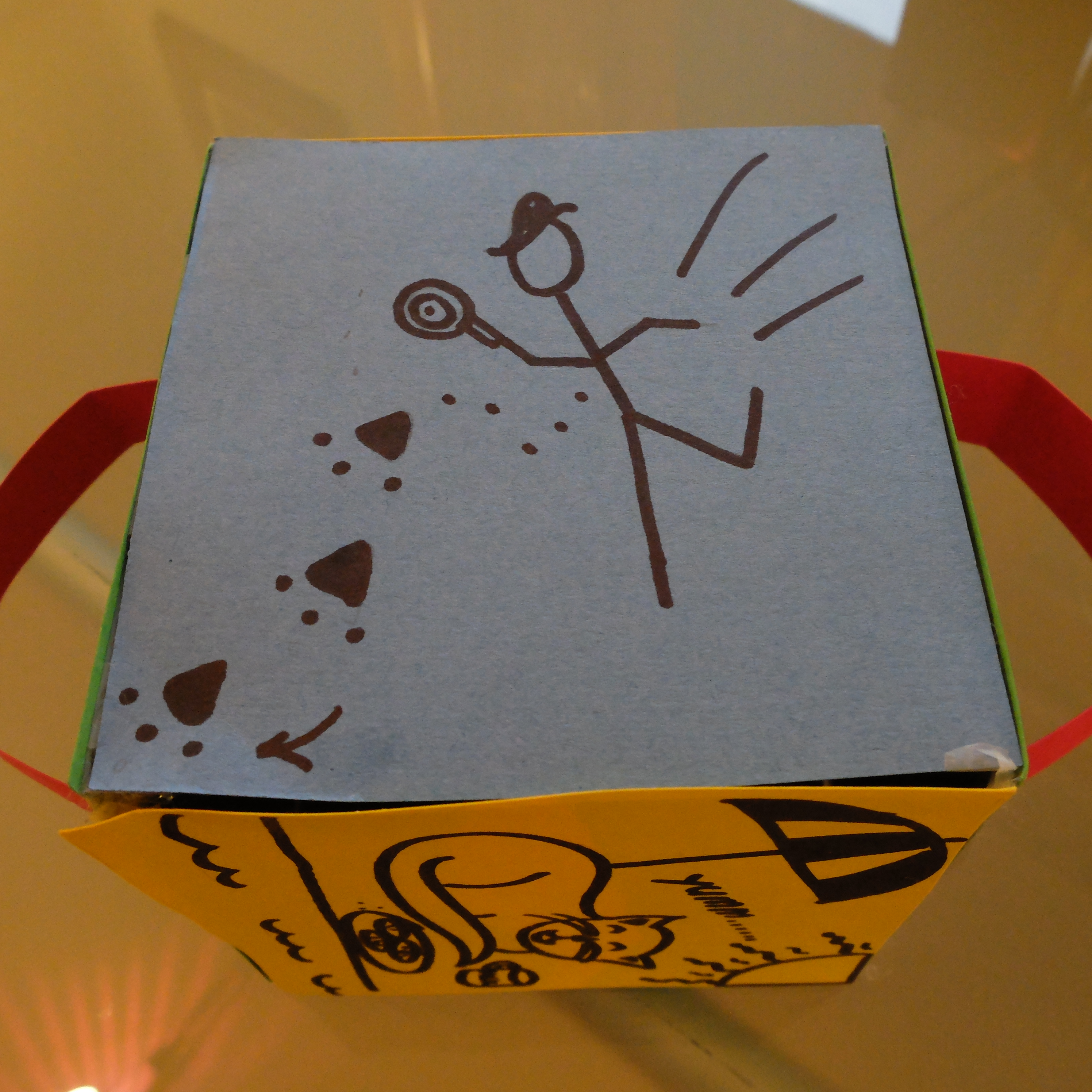
The stick figure man is on the case...
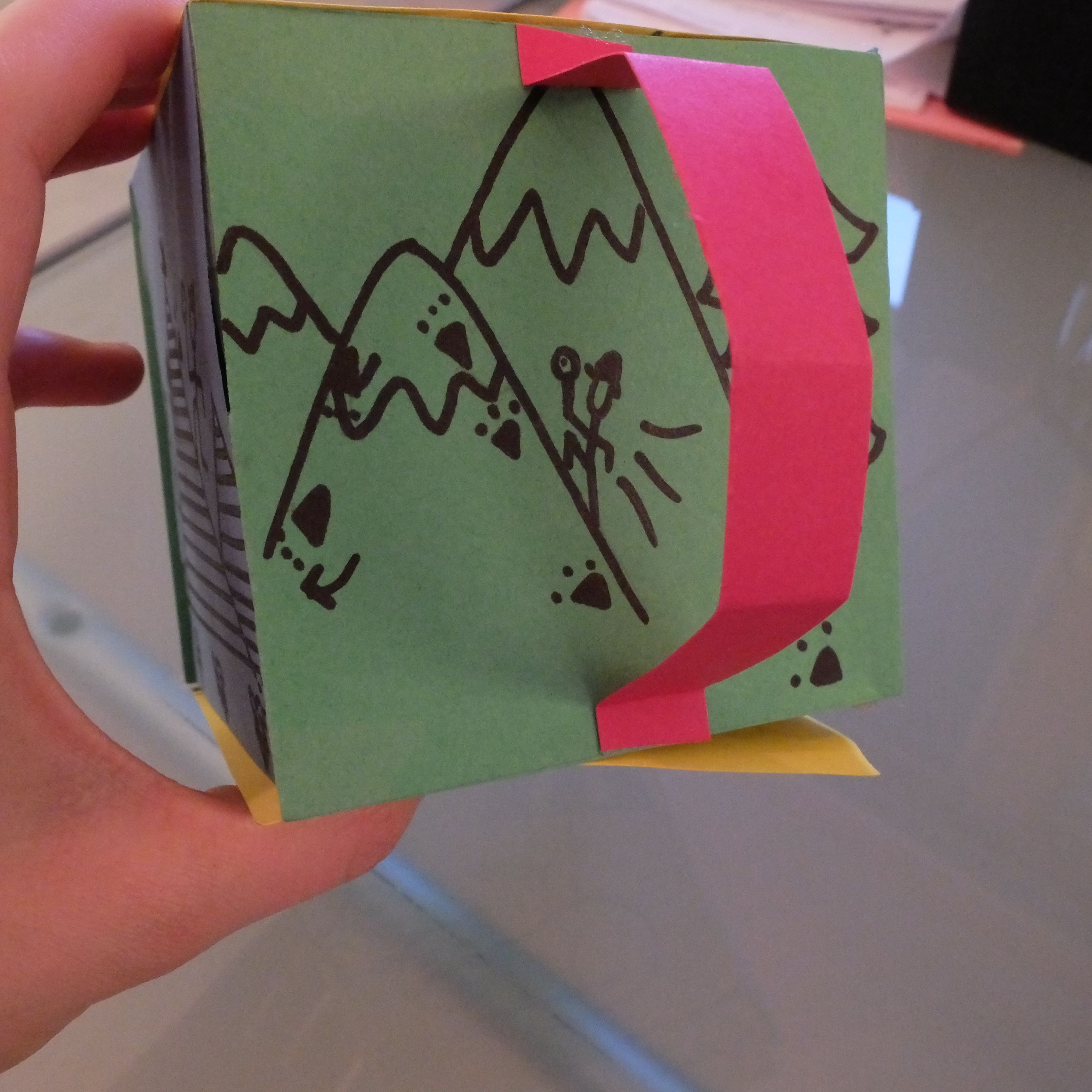
Traveling far and wide...
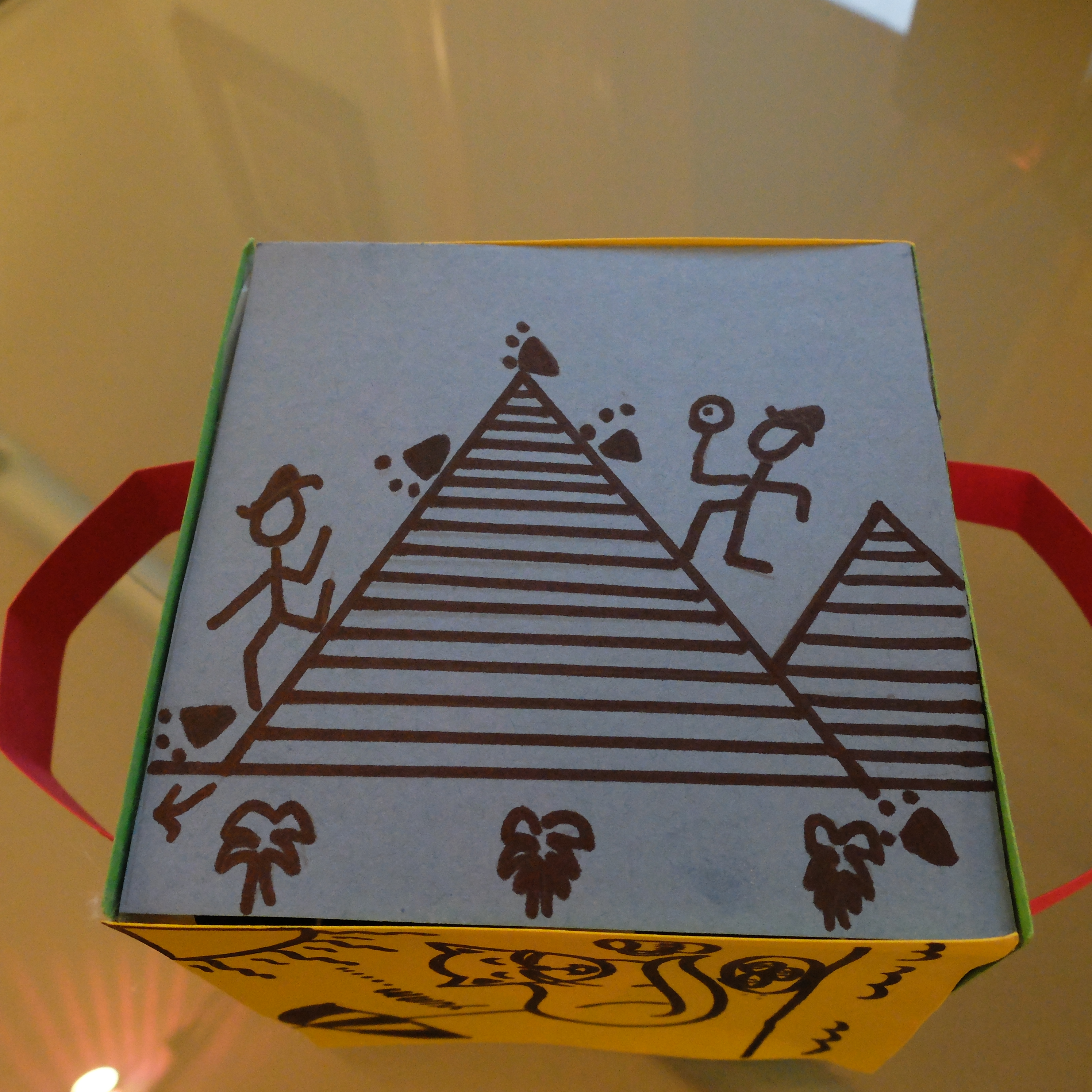
Traveling far and wide...
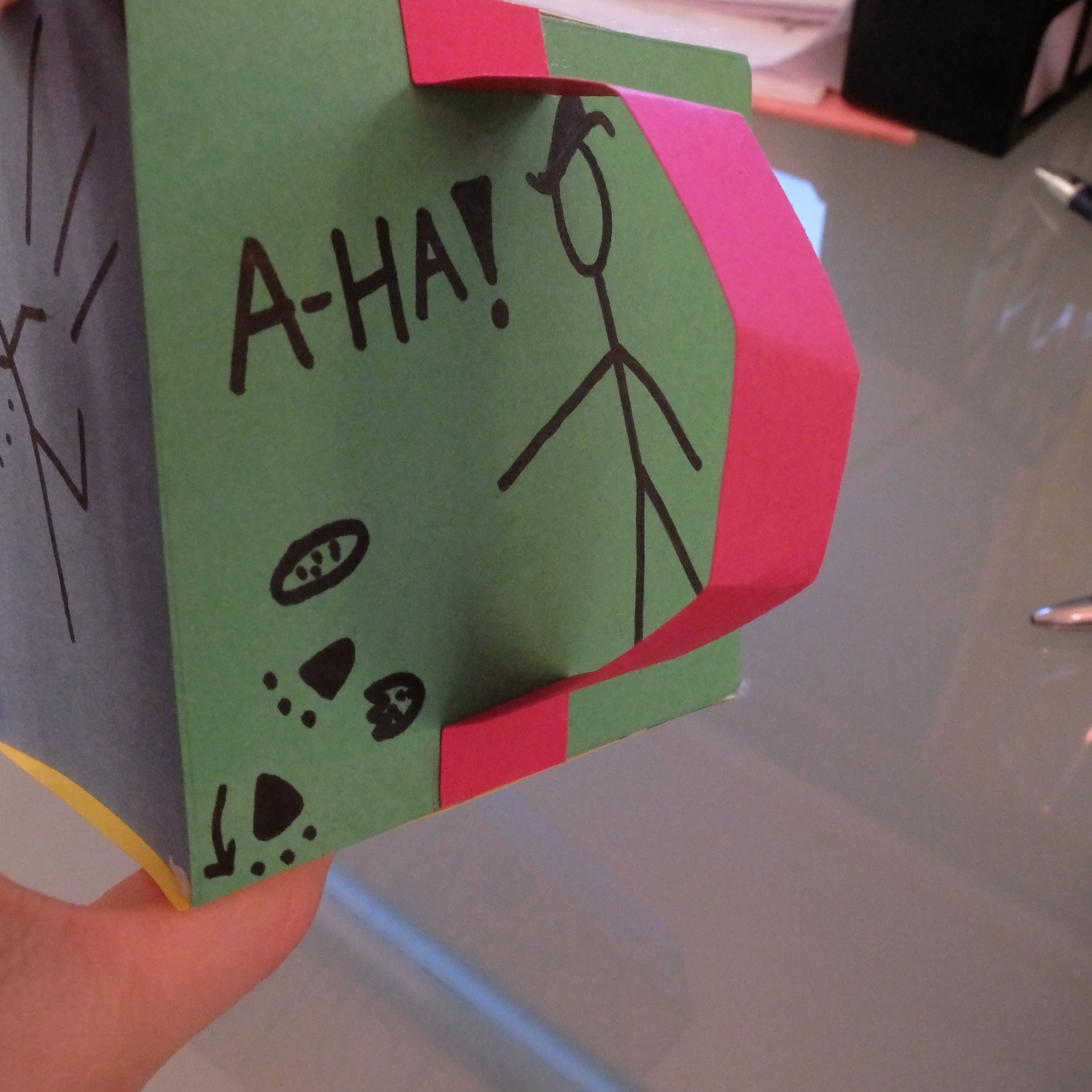
Whereupon he finds the culprit at last...
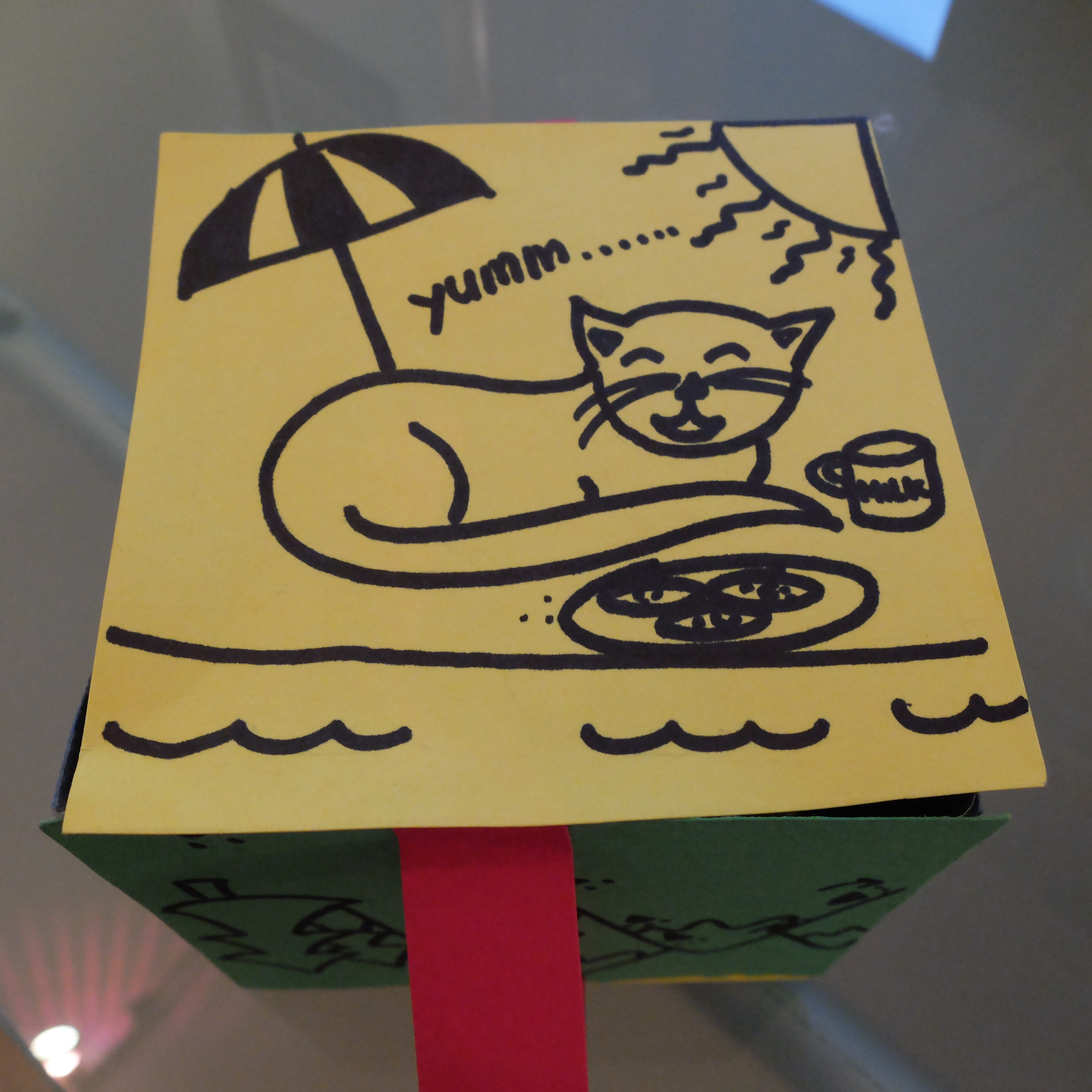
Lounging with her prize in the sun.Results of user testing: User grabbed it and started turning it, but did so in random directions, not following the exact order I intended. She did not rub anything.Proposed improvements: Add lamb's wool to the cat to encourage rubbing. Have bigger arrows to signify direction.
Final project: Design the user interface for a mobile app called Time Trade, which would allow users to trade time with one another for various tasks.
UI wireframes in Balsamiq Flow and results of user researchDesign Kit: The Course for Human-Centered Design
a NovoEd course by +Acumen and IDEO.org
Our team's Design Challenge:How might we provide healthier food options for people in need?The goal of our user research was to plan, conduct, and analyze interviews in the community as a first step toward identifying potential opportunities for design.
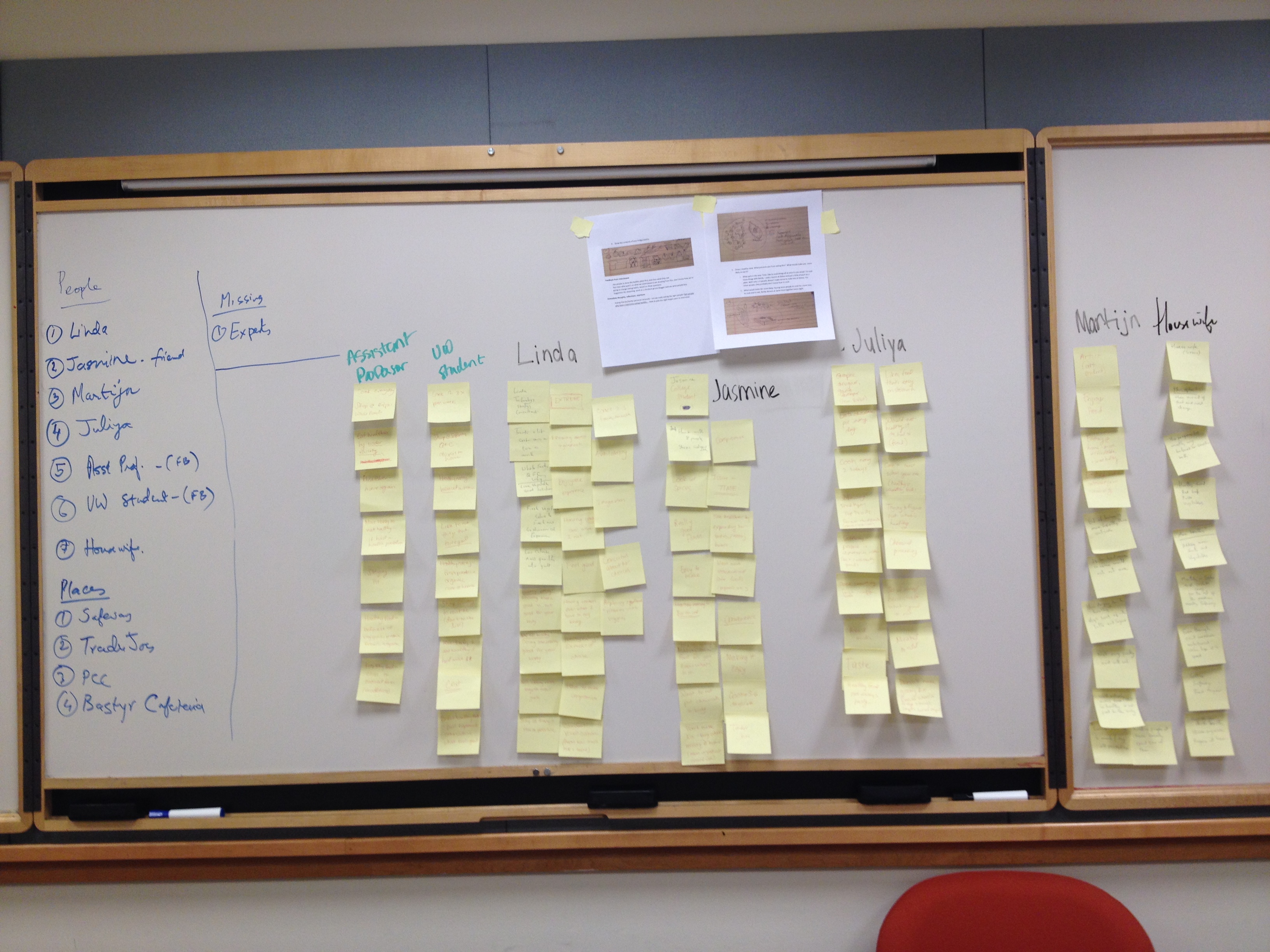
As a team, we reviewed the interviews we had conducted and identified the key findings from each one.
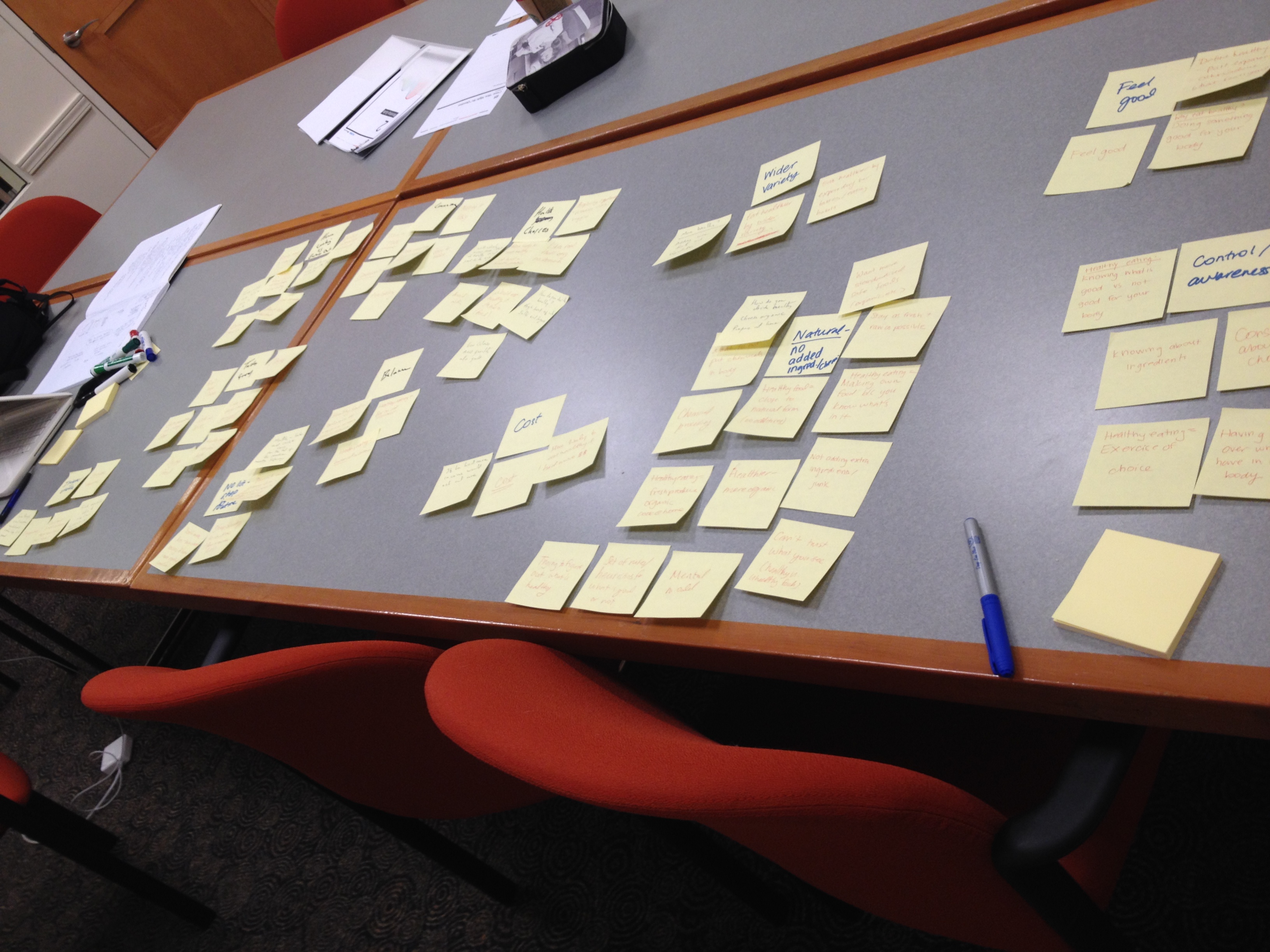
We grouped the findings according to theme (e.g., cost, "feeling good," control/awareness, routine, etc.).
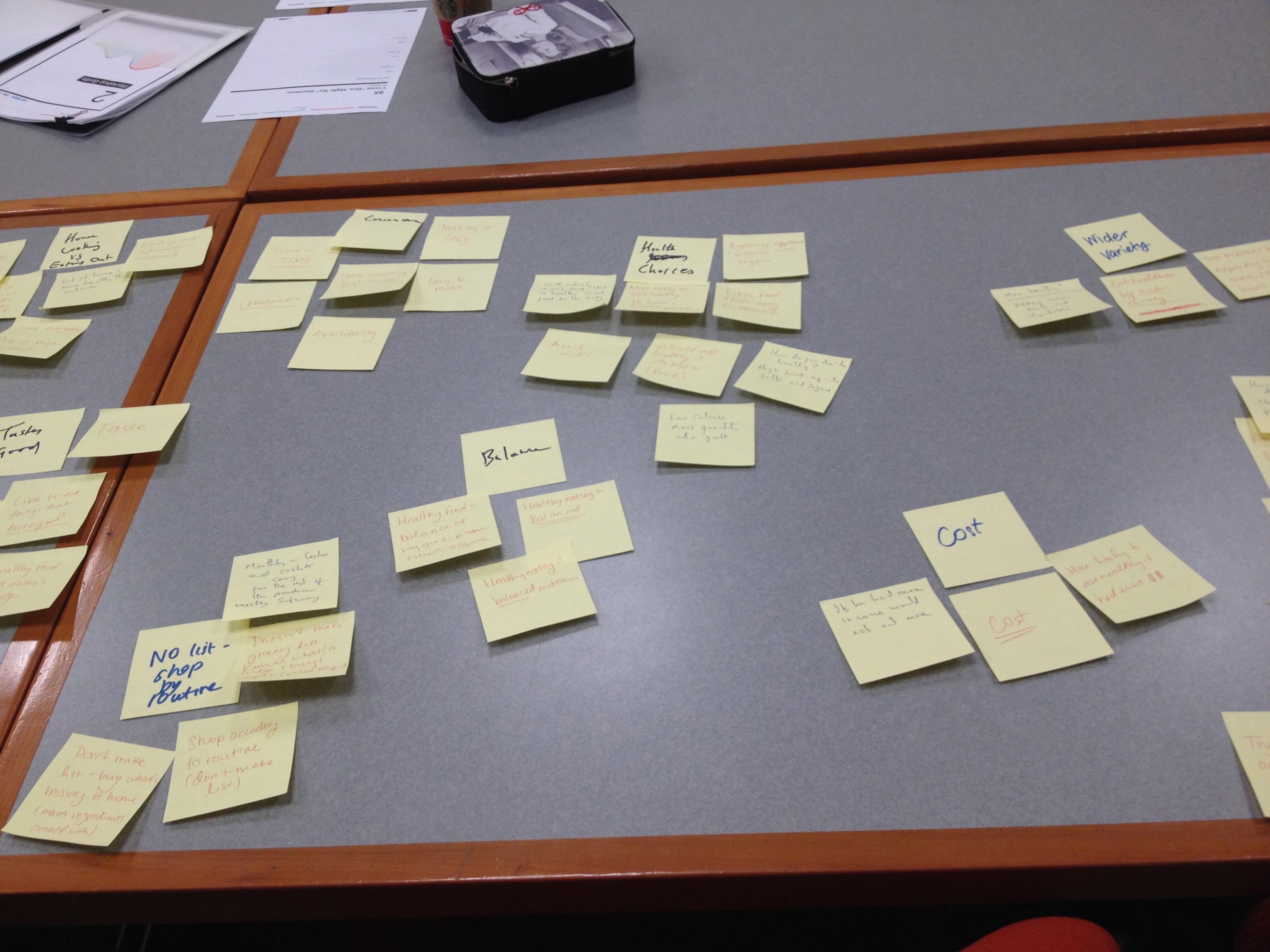
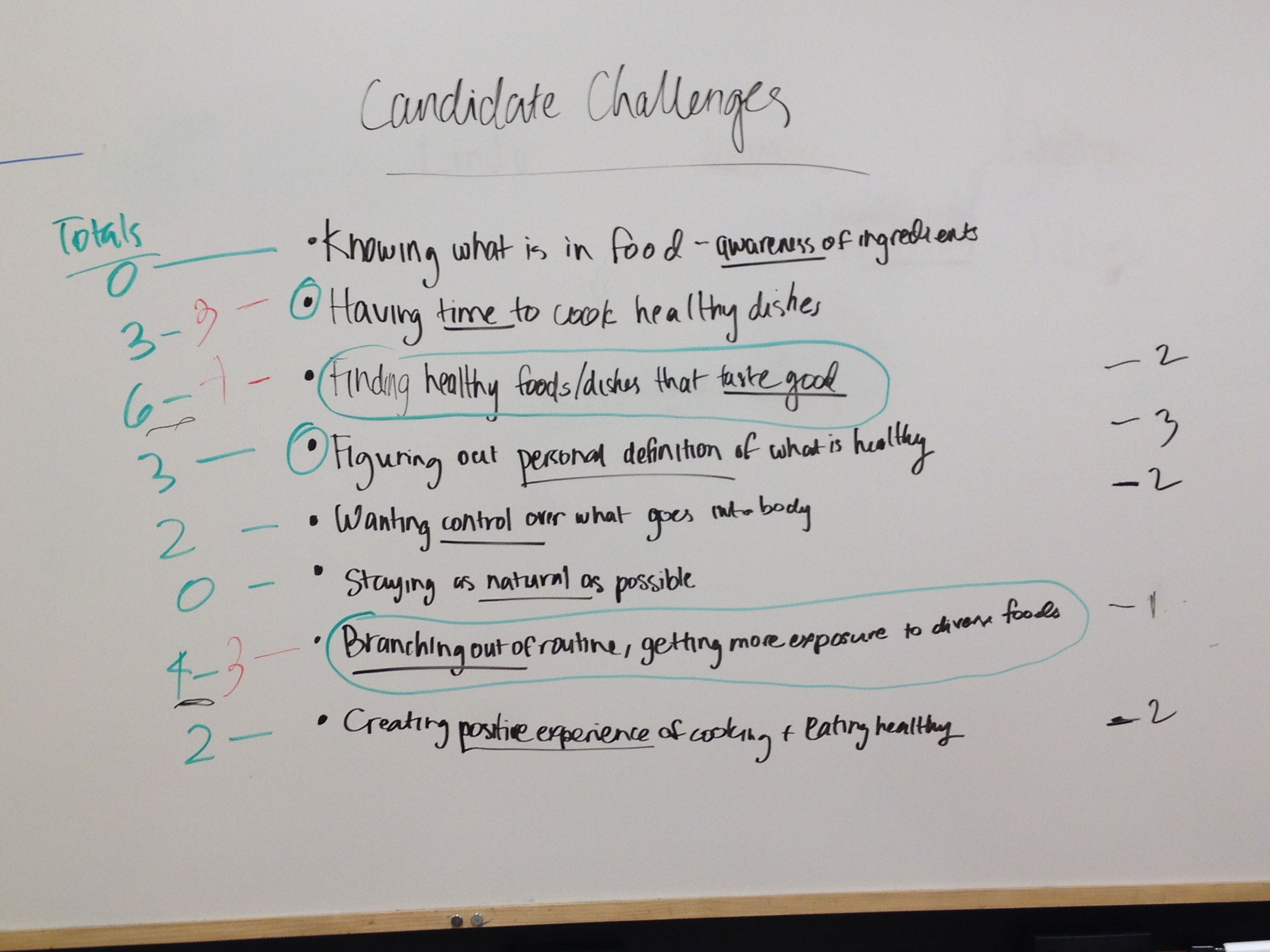
We collectively voted for the themes we thought were the most important and promising for the purposes of our project. These formed the basis of our Insight Statements (see next photo).
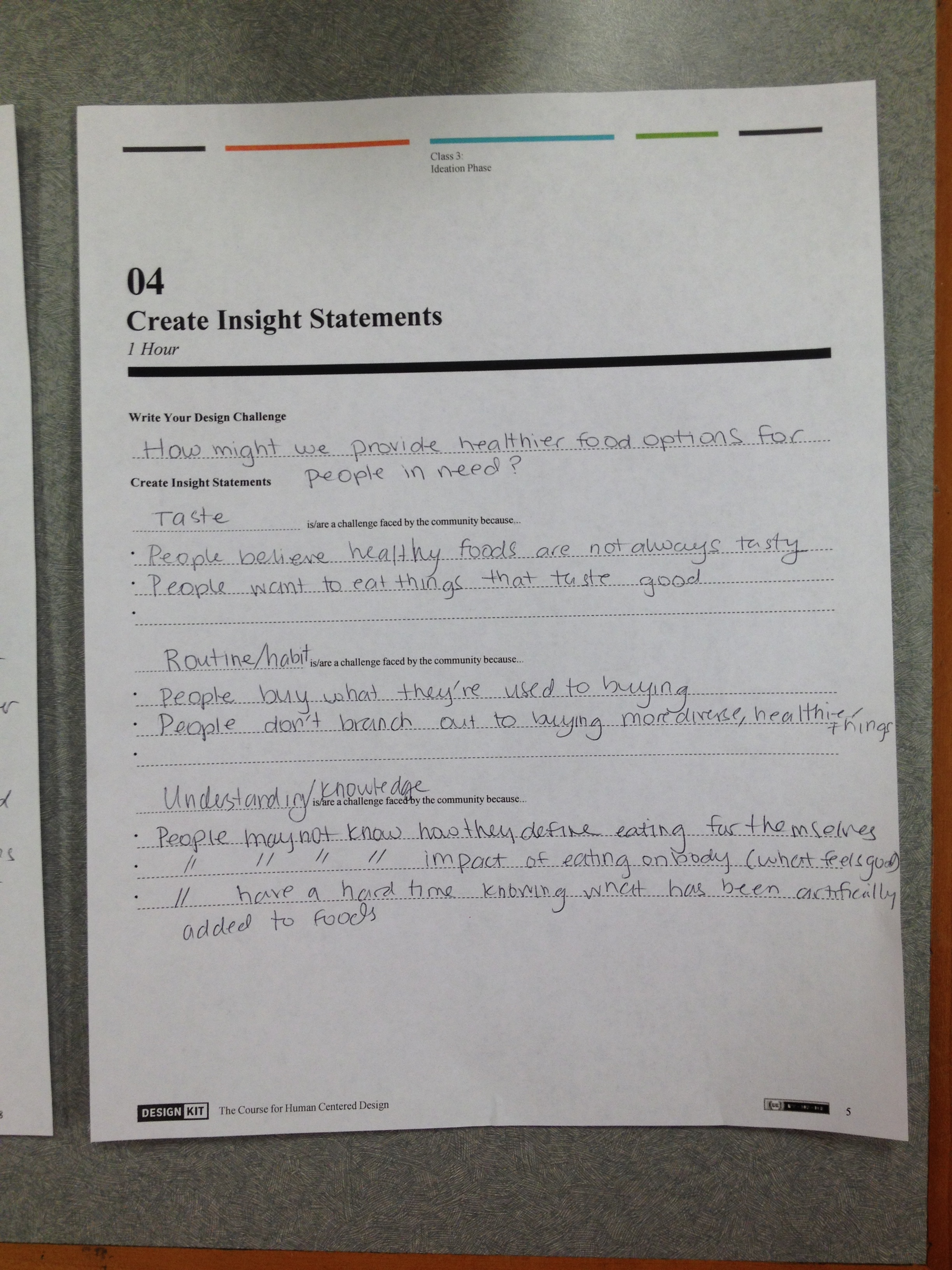
We related the major themes we chose (taste; routine/habit; and understanding/knowledge) back to our design challenge by describing why they pose a problem to the members of the community we spoke with.
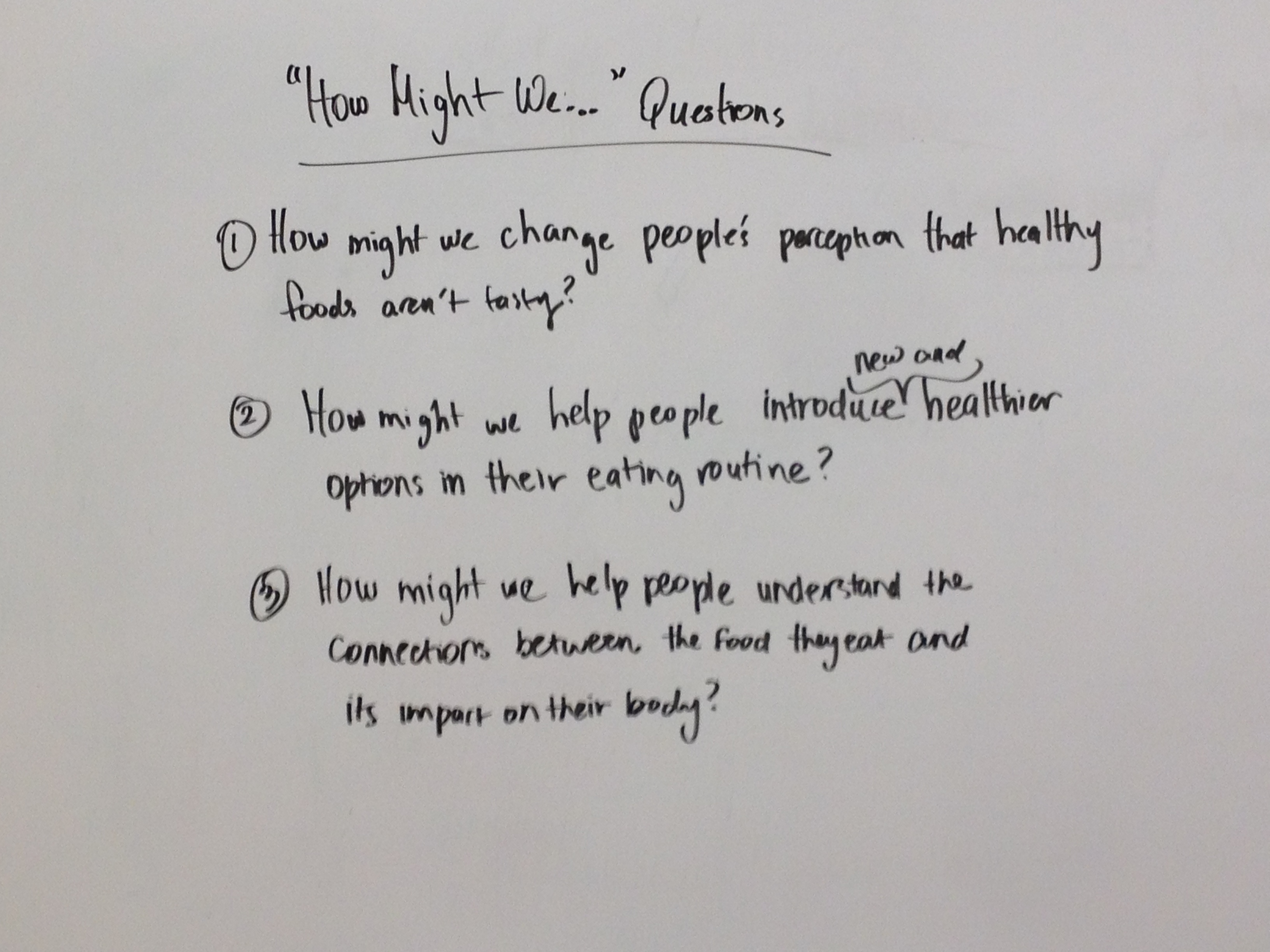
The resulting Insight Statements formed the basis of the "How Might We..." questions we came up with in order to address them.
Goal of brainstorming: Come up with a myriad of possible solutions to the "How Might We..." questions we had identified from our analysis of user resarch.
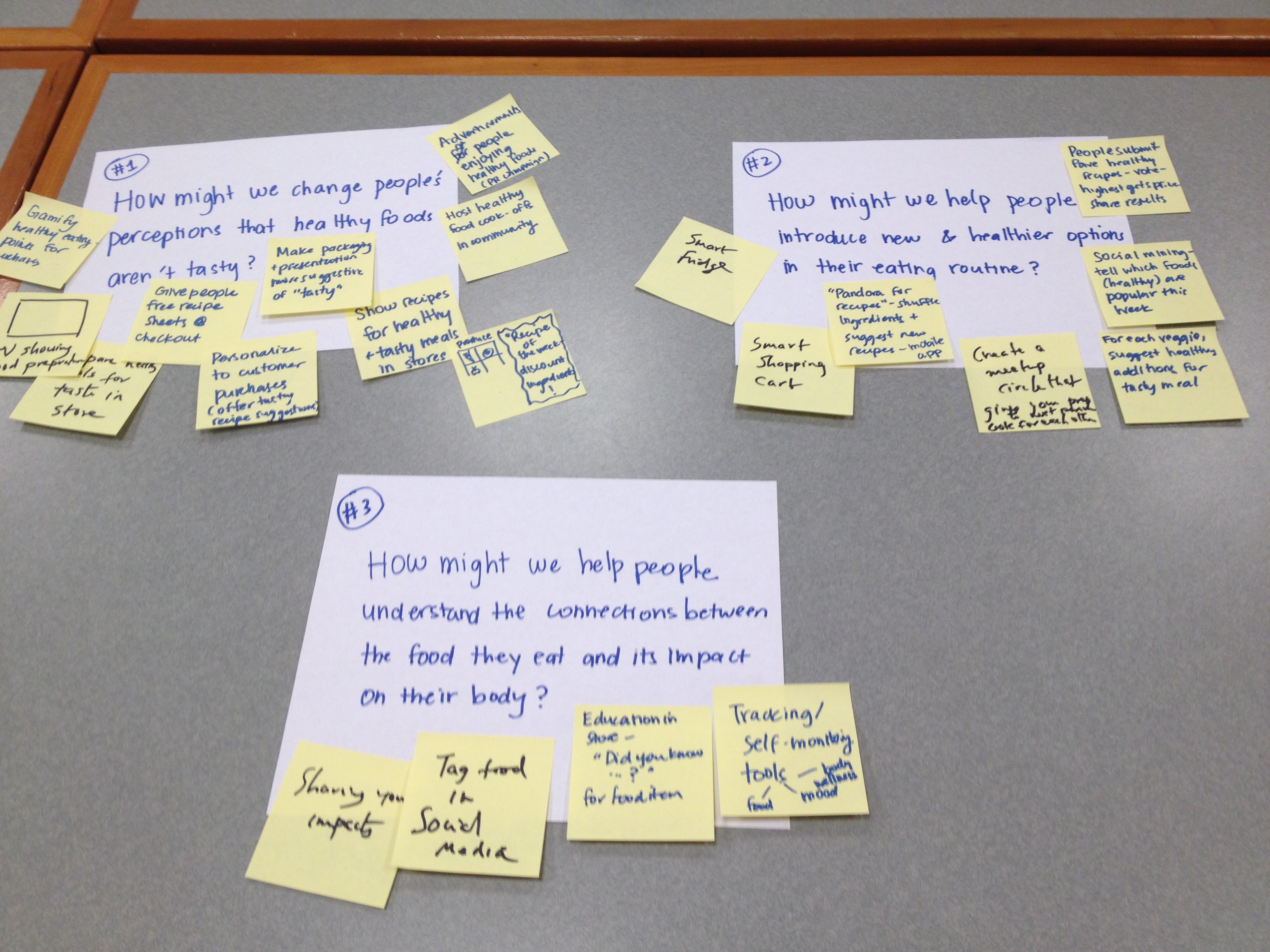
Throughout our brainstorming, we were guided and grounded by our "How Might We" questions, Insight Statements, themes, and findings of our user research.
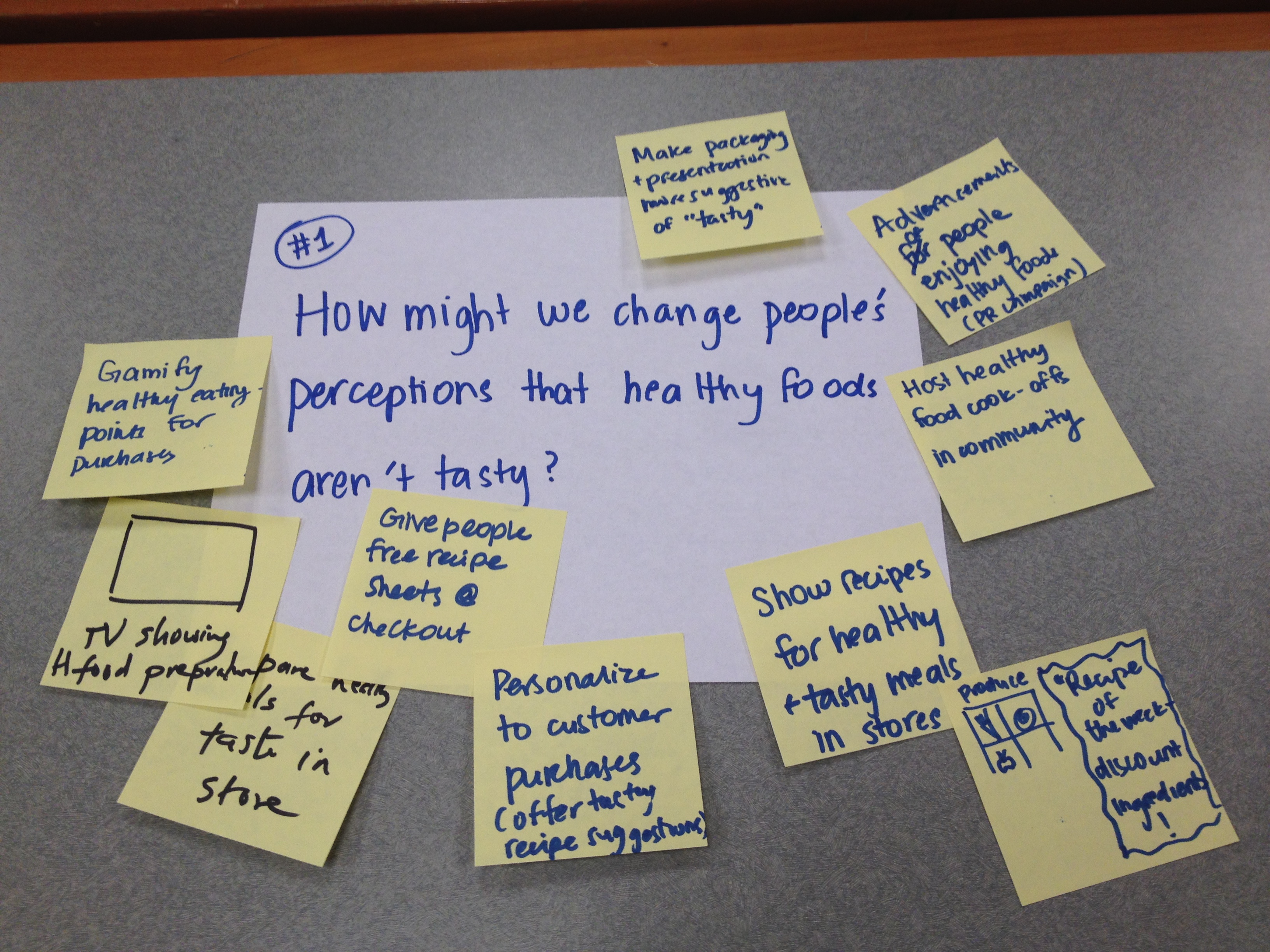
Throughout our brainstorming, we were guided and grounded by our "How Might We" questions, Insight Statements, themes, and findings of our user research.
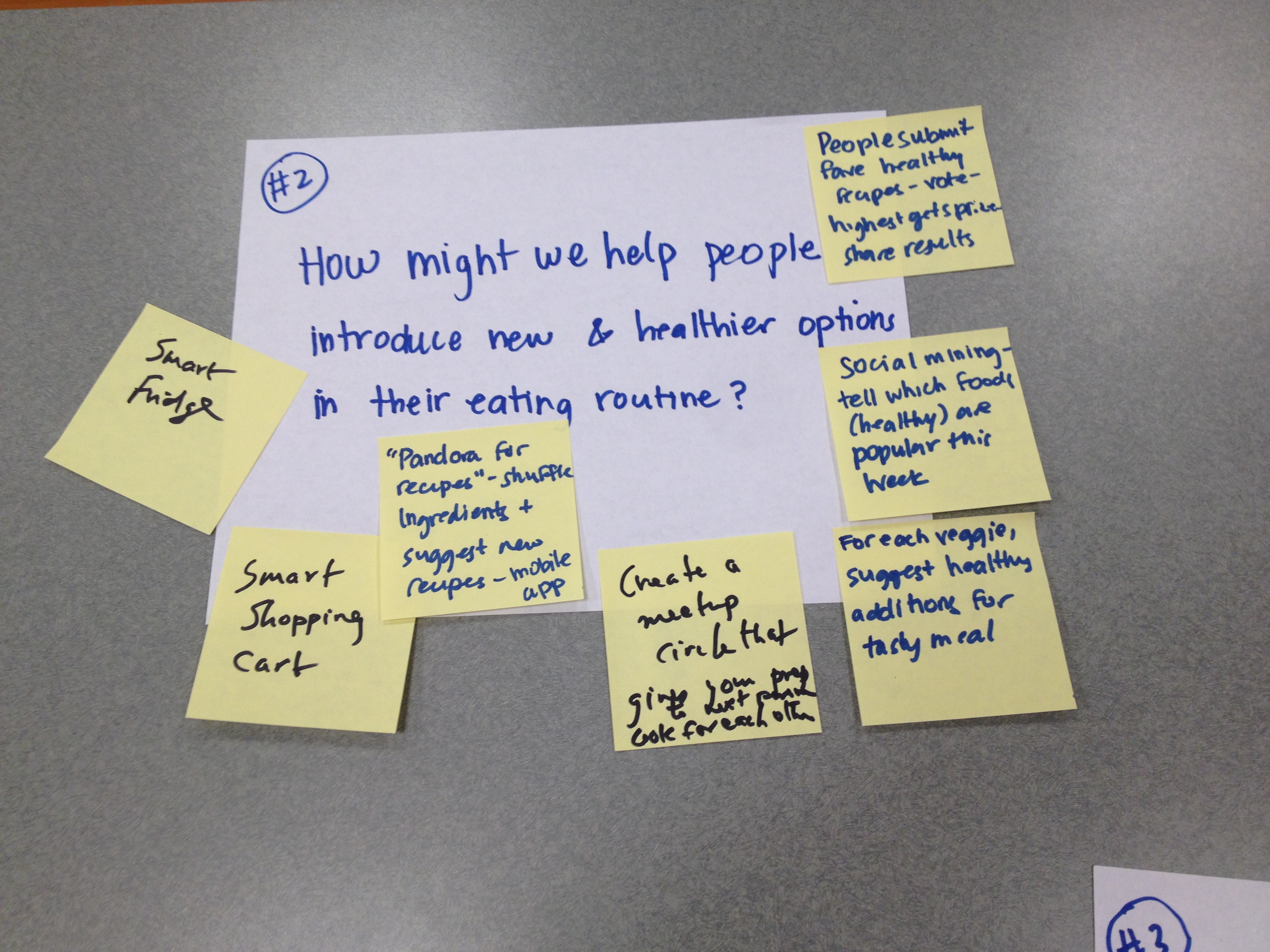
Throughout our brainstorming, we were guided and grounded by our "How Might We" questions, Insight Statements, themes, and findings of our user research.
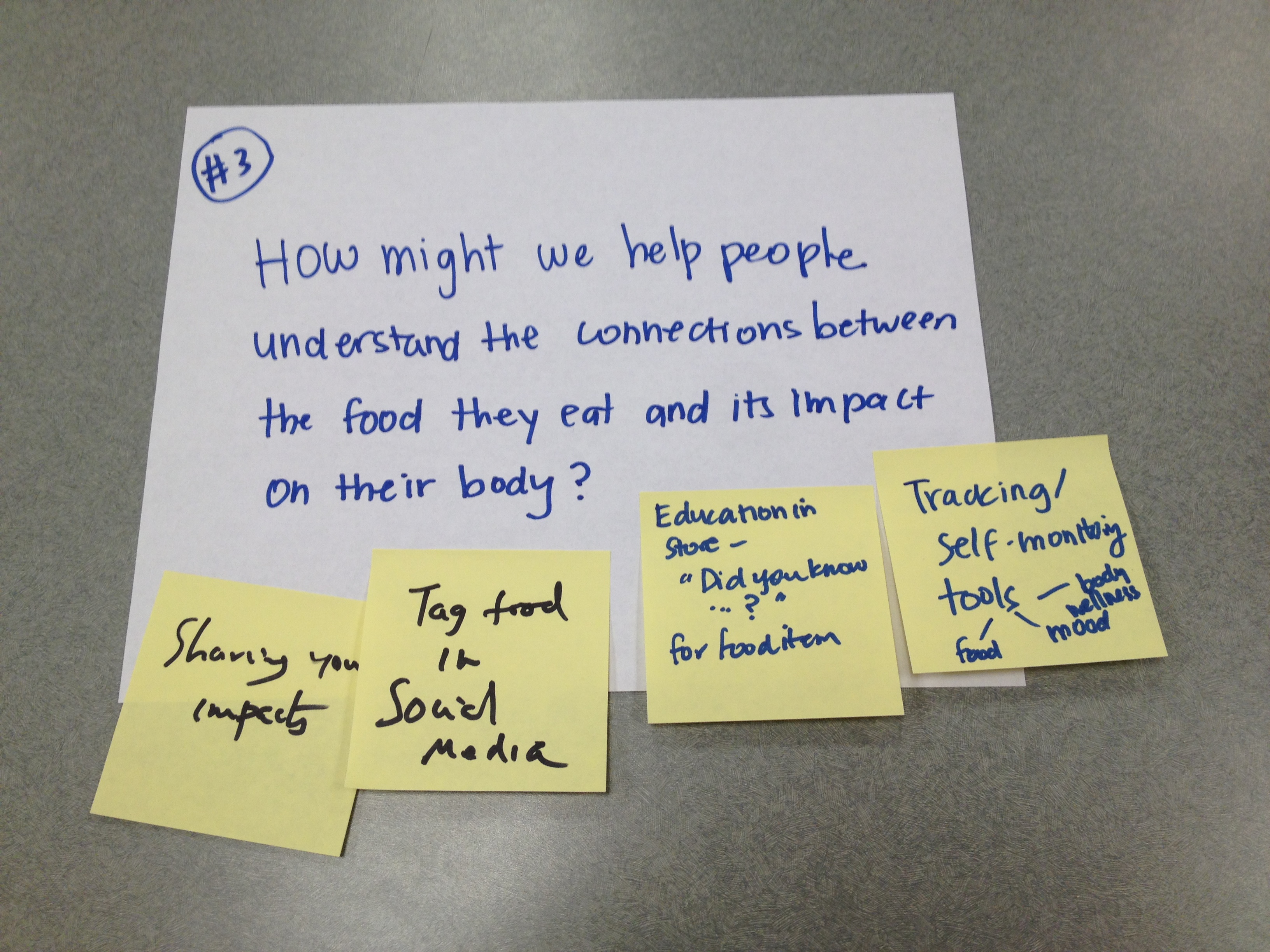
After voting on our brainstormed solutions, we settled on our winning idea:Encouraging people in need to eat healthier by suggesting recipes for healthy meals in grocery stores. The ingredients of these recipes would be discounted, and an employee would provide live cooking demonstrations and samples of the recipe in-store.
Our team's proposed idea:Providing recipes for healthy meals in grocery stores. The ingredients of these recipes would be discounted, and an employee would provide live cooking demonstrations and samples of the recipe in-store.The goal of our experience mapping was to imagine each step of the user's experience with our service, and consider how we could validate the different components of our solution through prototyping.To guide us in our experience map, we visualized the steps that an imaginary food shopper, Archie, would take in interacting with our service.
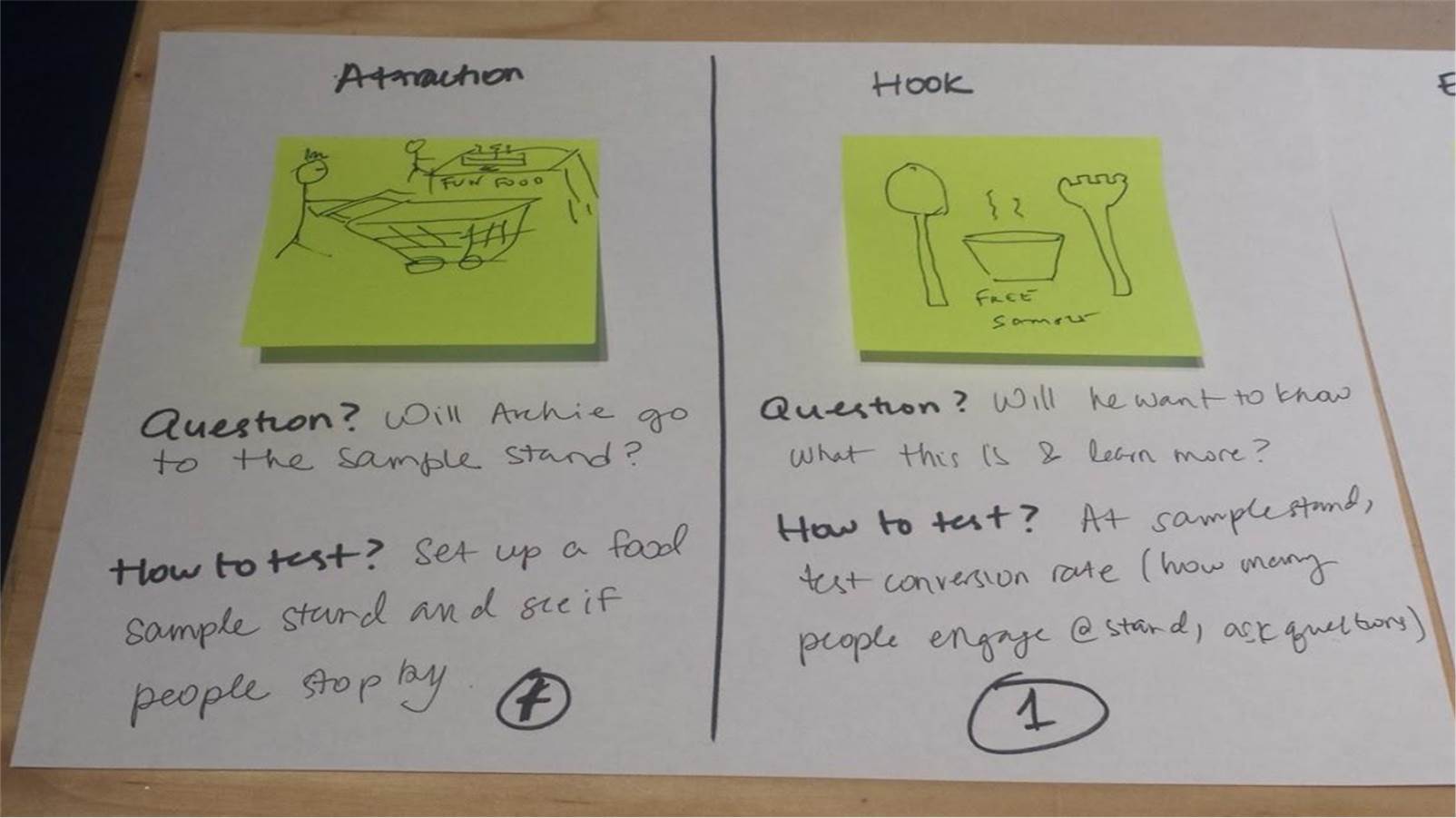
First, he would be attracted by the sample stand (where a staff member would be demonstrating how to prepare the healthy meal recipe). Second, he would be interested to learn more about what he just sampled.
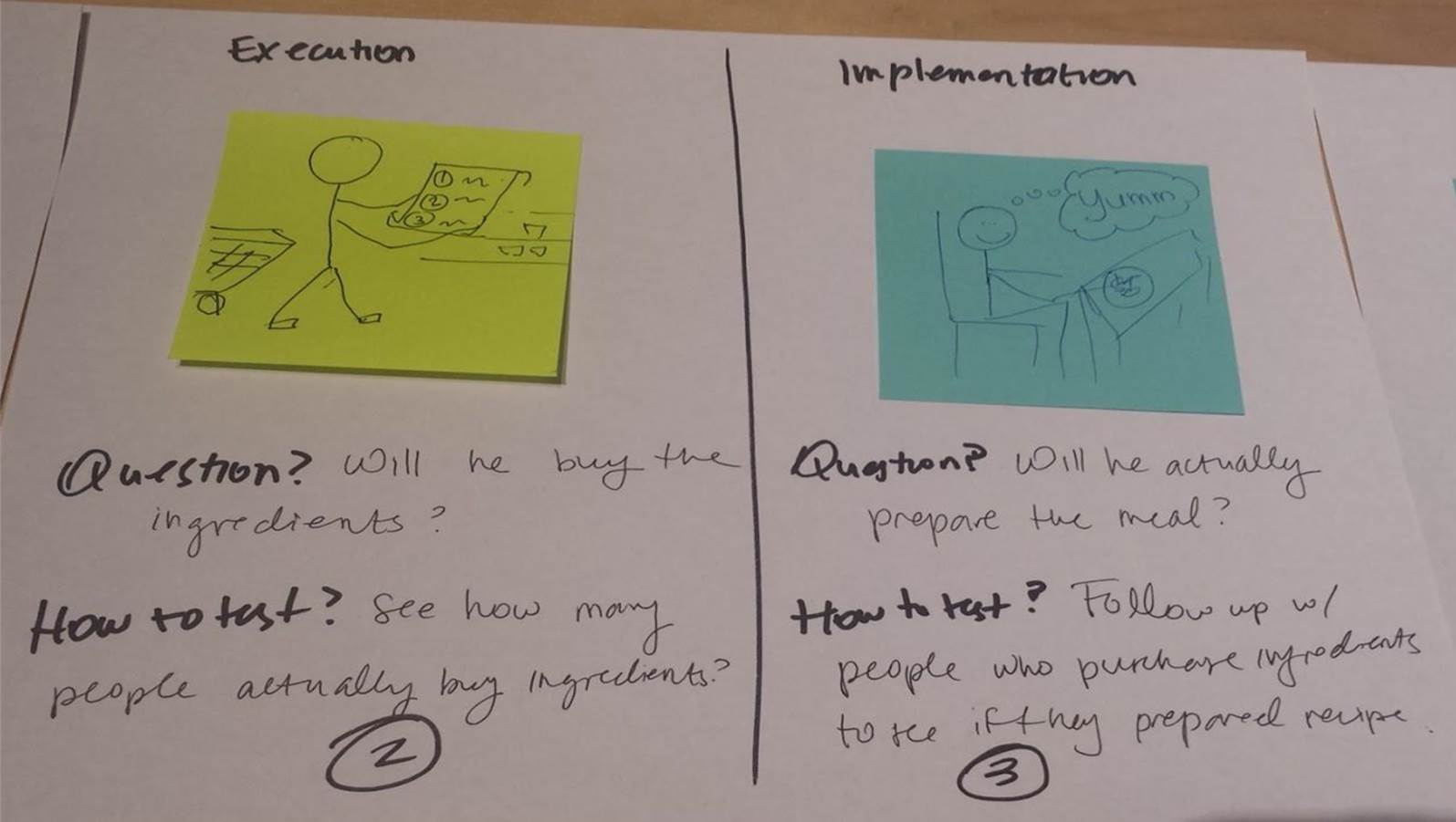
Third, he would buy the ingredients of the recipe, which would be discounted and displayed next to the sample stand. Fourth, he would prepare the healthy meal recipe at home.
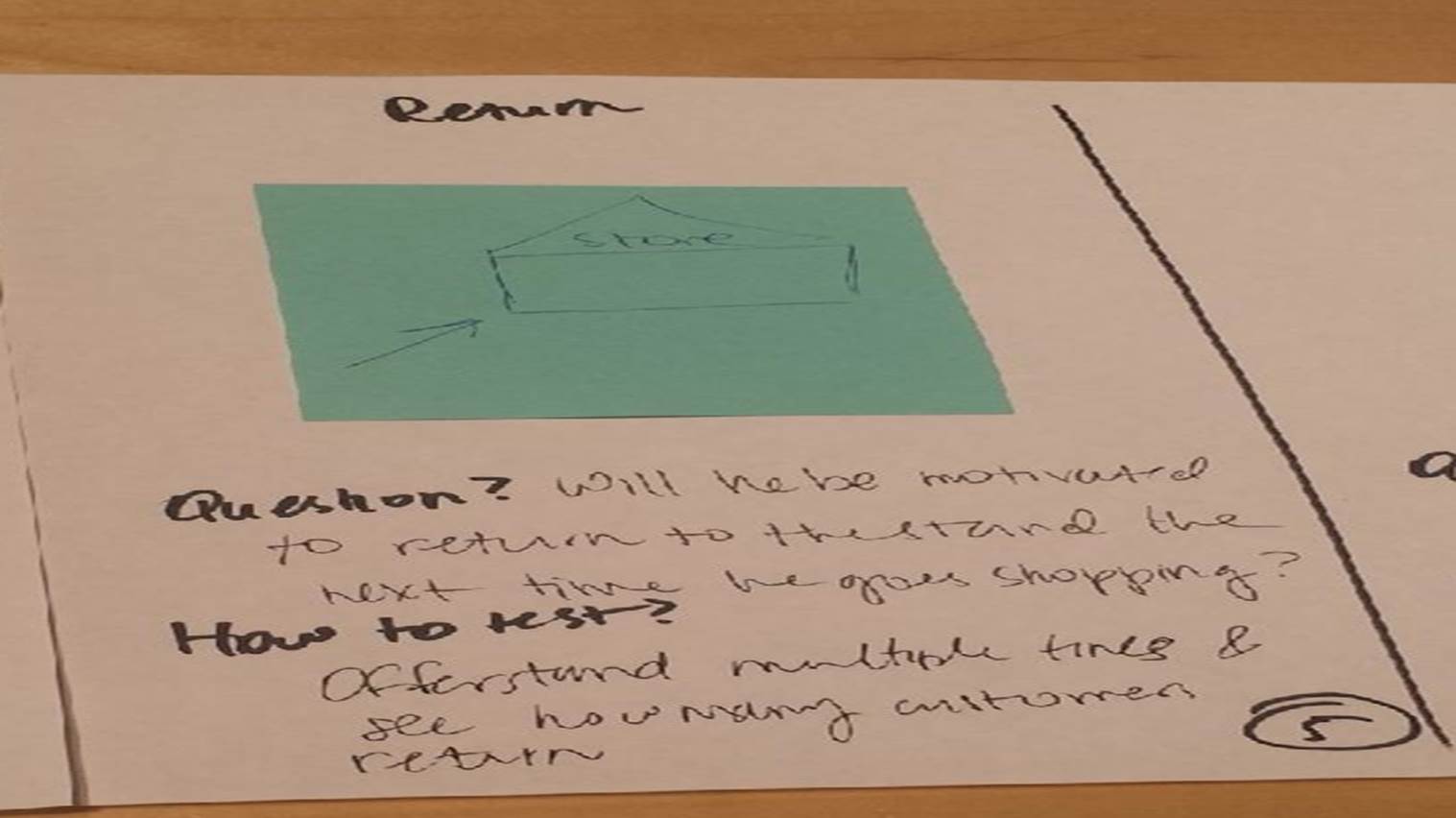
Fifth, he would return to the healthy meal stand the next time he went shopping, in order to see what the new healthy meal recipe is.
Short-term goal of prototyping: Create a conceptual prototype of our solution, called Healthy Bites, that could be used as a foundation for future testing and implementation in the community.
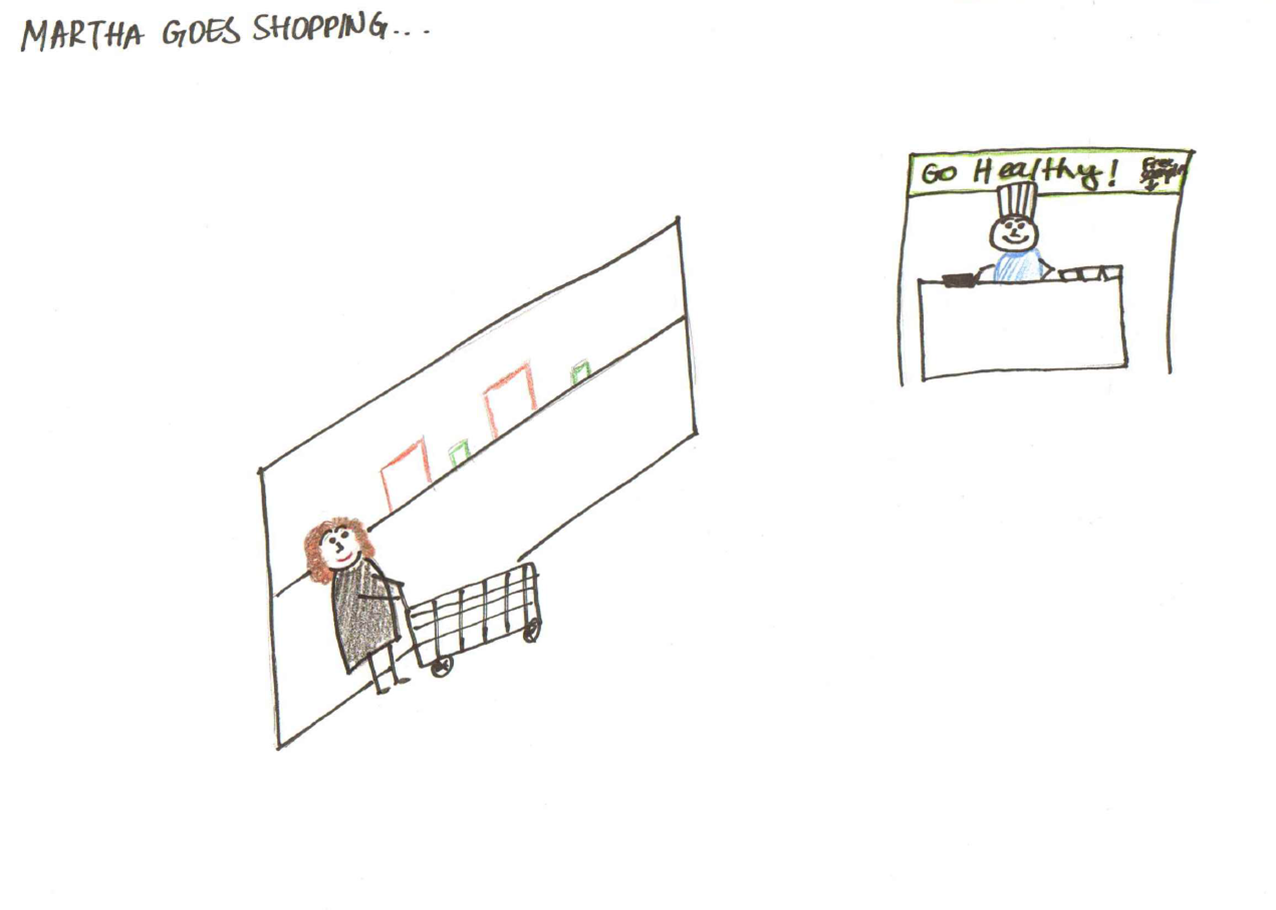
Martha sees the Healthy Bites stand while doing her grocery shopping...
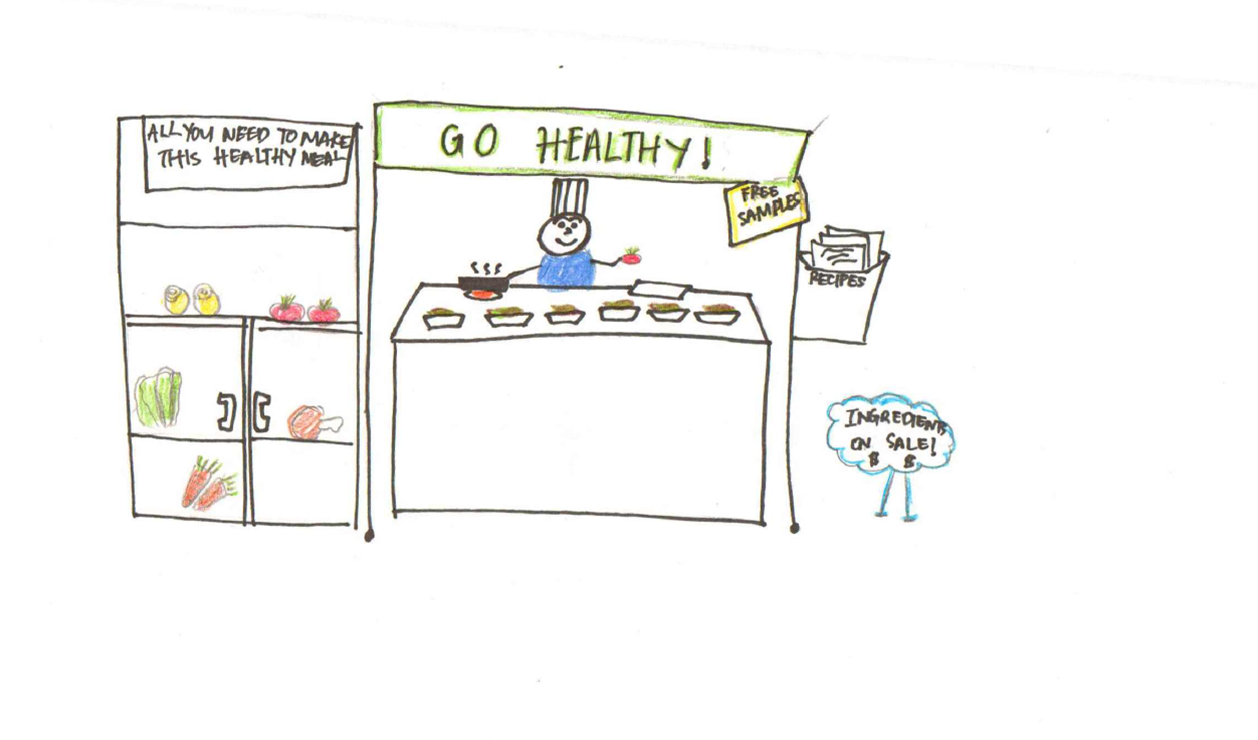
She walks up to the stand to take a closer look...
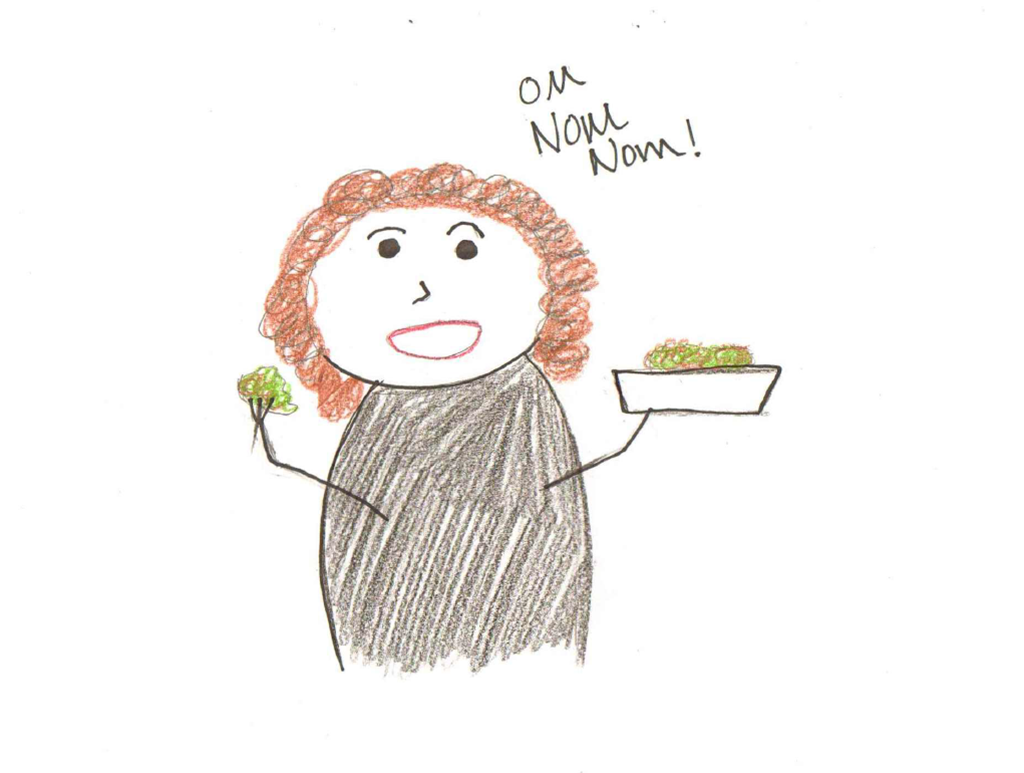
She tries one of the Healthy Bites samples that the chef has just prepared...
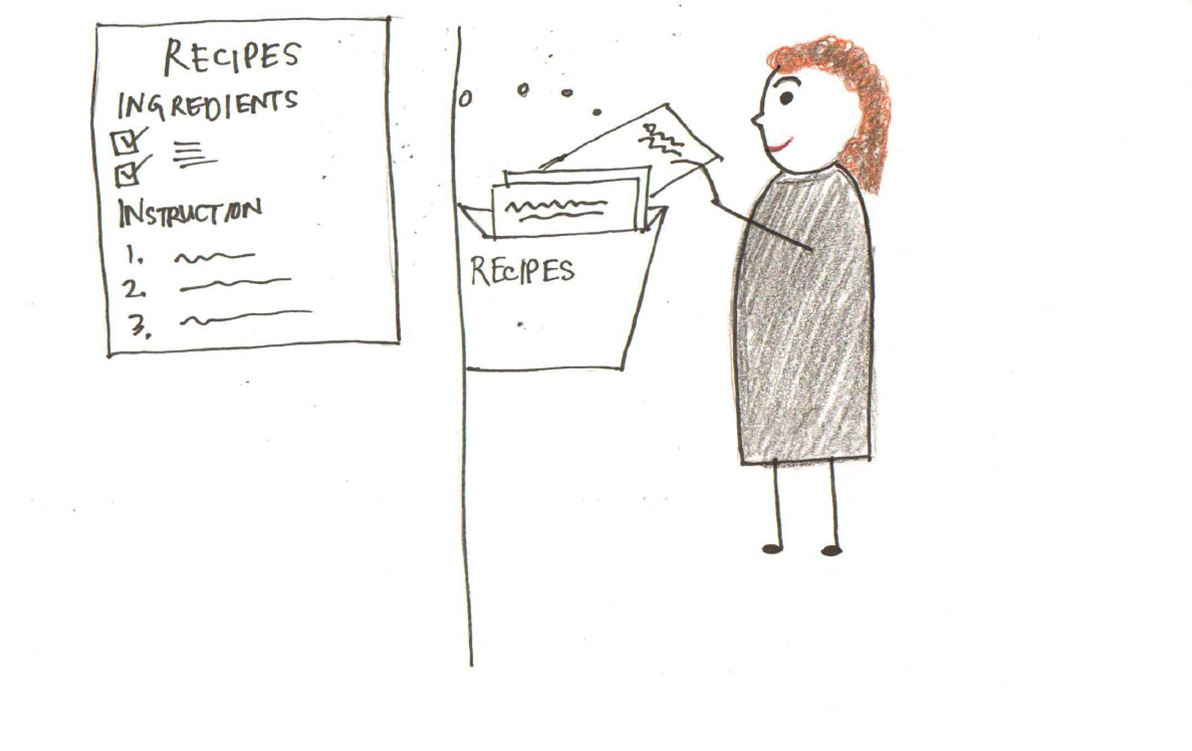
She picks up the Healthy Bites recipe...
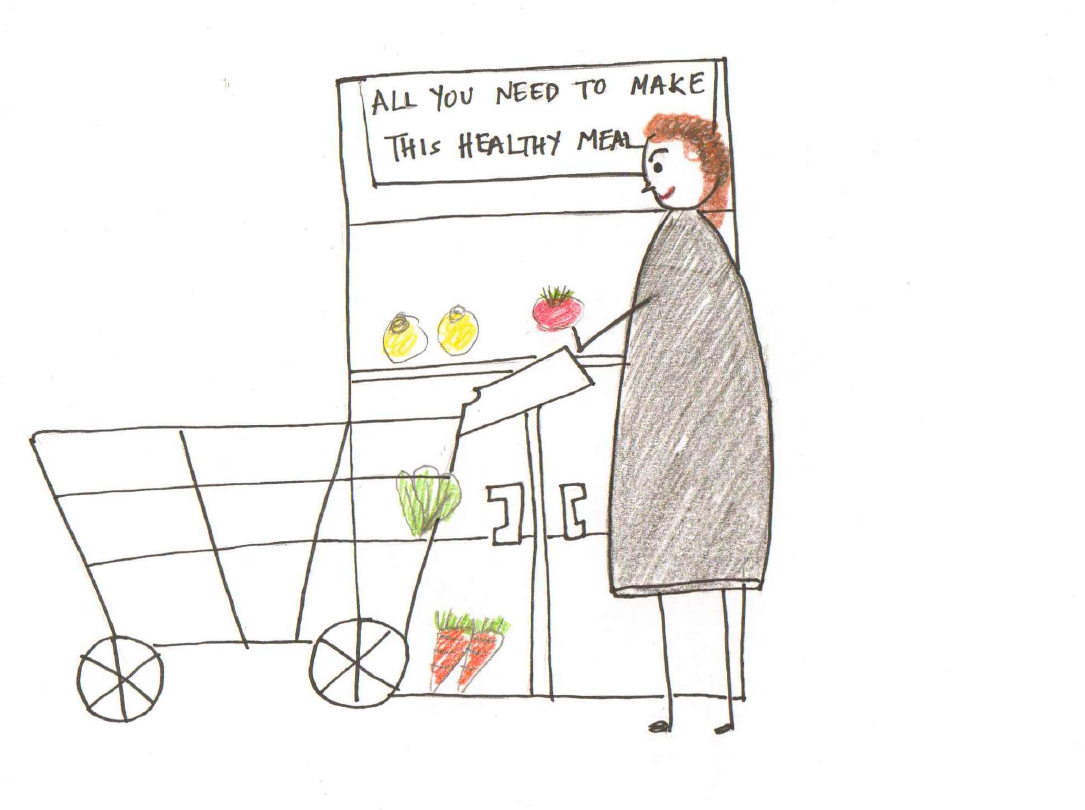
She picks up the discounted ingredients at the stand...
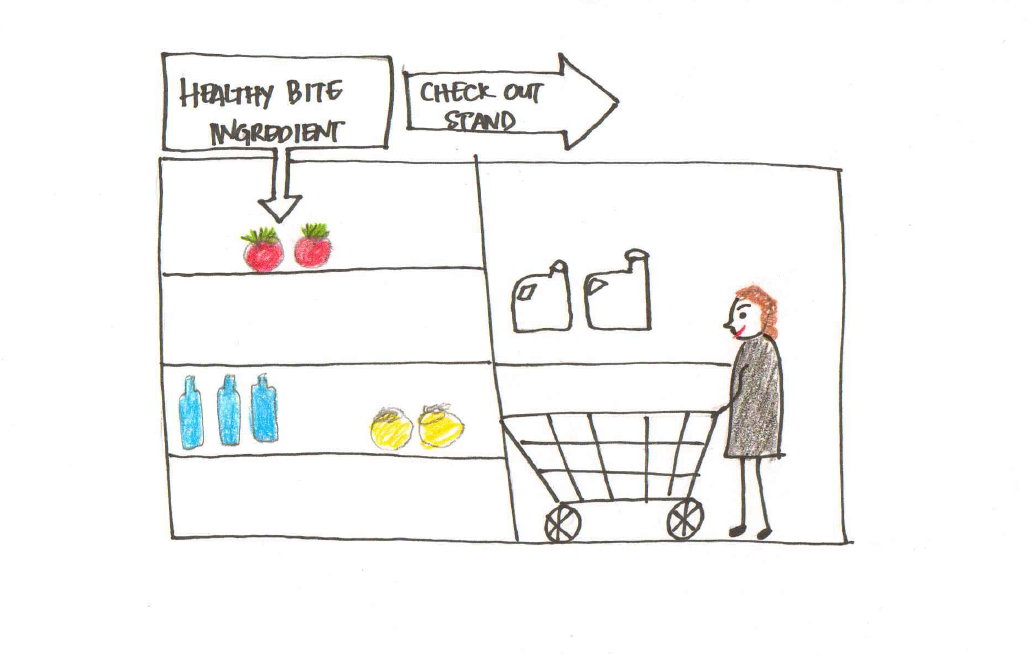
As she continues shopping, she notices that the Healthy Bites ingredients are highlighted...
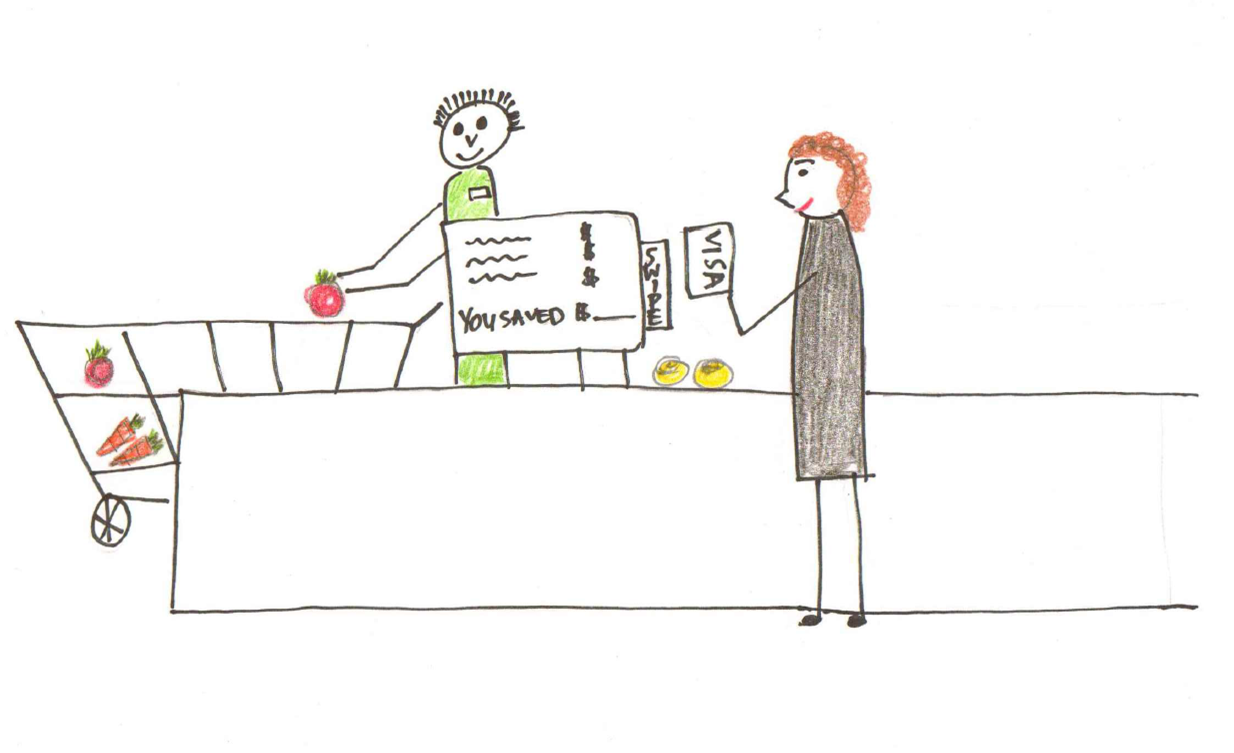
She purchases her Healthy Bites ingredients...
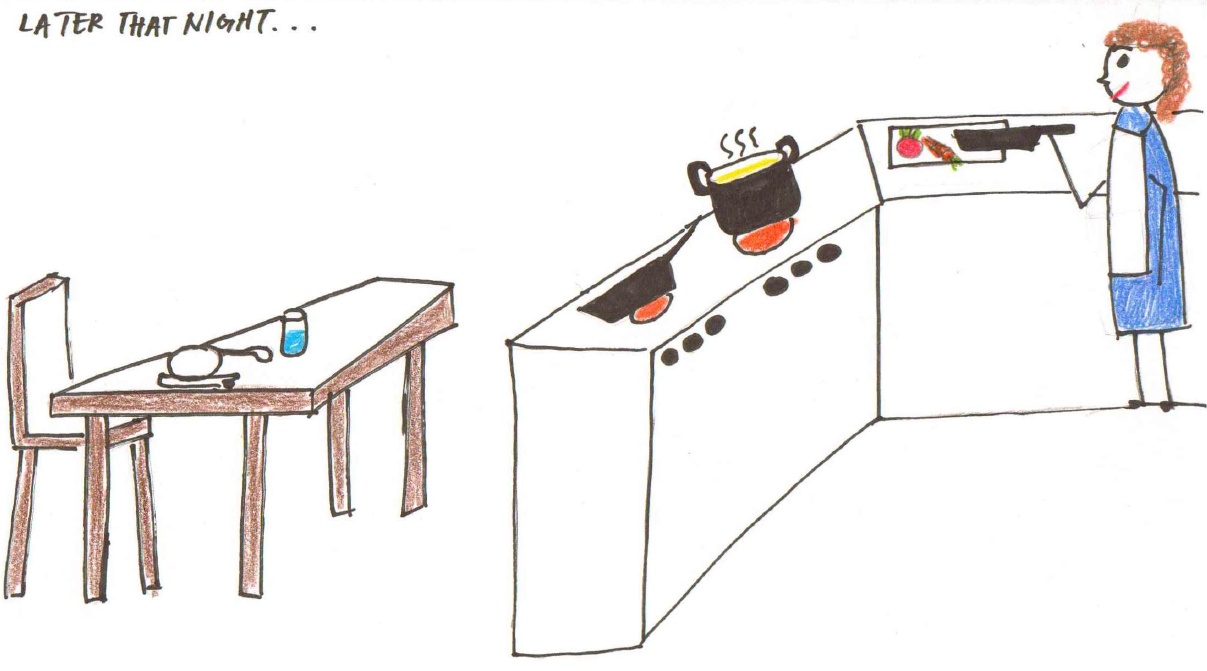
At home, she prepares the Healthy Bites recipe...
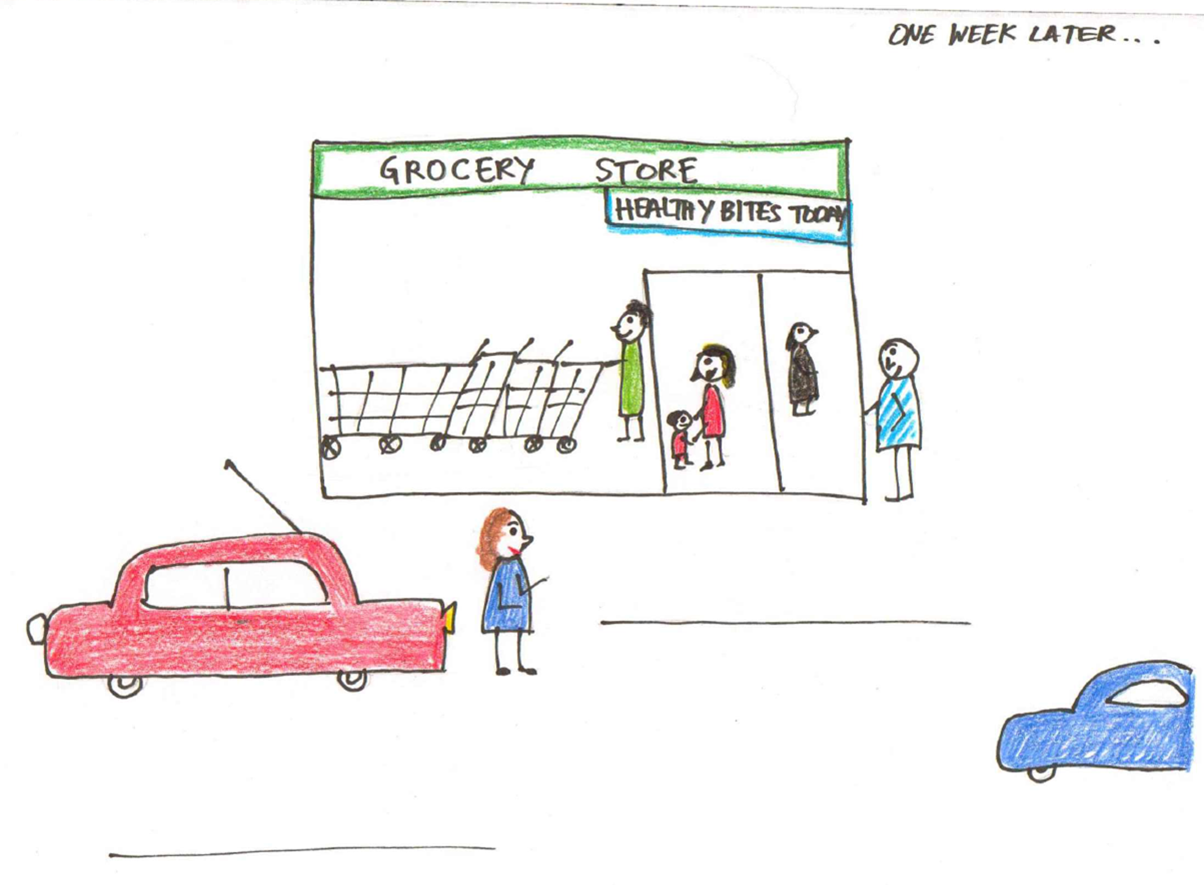
The following week, she returns to the grocery store to see what the new Healthy Bites recipe is.